What You Will Learn
- What Google I/O actually is and why 2026 is a turning point
- Google AI overview 2026 now appears in 48% of all searches globally
- The new Intelligent Search Box accepts images, files, videos, Chrome tabs – not just text
- AI agents run 24/7 reading your website whether a human searches or not
- Google beats ChatGPT search 2026 by making AI the default, not an option
- Simple actions you can take right now to stay visible in Google AI search 2026
On May 19, 2026, Sundar Pichai walked on stage at Google I/O and said something that made every SEO professional sit up straight: “This is the biggest upgrade to our search box in over 25 years.”
Not just the results. Not just the ranking algorithm. The interface that 8 billion people use daily to find information was completely rebuilt. It runs on the Gemini 3.5 Flash default search model and focuses on AI-first interactions. For anyone managing a website, running an agency, or trying to grow organic traffic in India or globally, Google I/O 2026 AI Mode SEO impact is the most important development you need to understand right now.
This blog breaks it down in plain terms: what changed, what it means for your rankings, and what to do next.
What Is Google I/O and Why Should You Care?
Google I/O is Google’s annual developer conference held every May in Mountain View, California. The “I/O” stands for Input/Output – a computer science term. Think of it as Google’s biggest announcement event of the year, like Apple’s WWDC but for Google.
Every year, Google reveals major updates to Search, Android, AI models, and developer tools. Marketers, SEO professionals, and website owners closely monitor these announcements. What Google reveals here shapes how billions of people find content for the next 12 months.
The 2026 edition on May 19 and 20 was unlike any past I/O. For the first time, Google didn’t just add a feature to Search. It rebuilt the foundation of how Search works.
What Changed in Google Search After I/O 2026
Five major changes were announced at Google I/O on May 19, 2026. Each one has direct consequences for how websites get found.
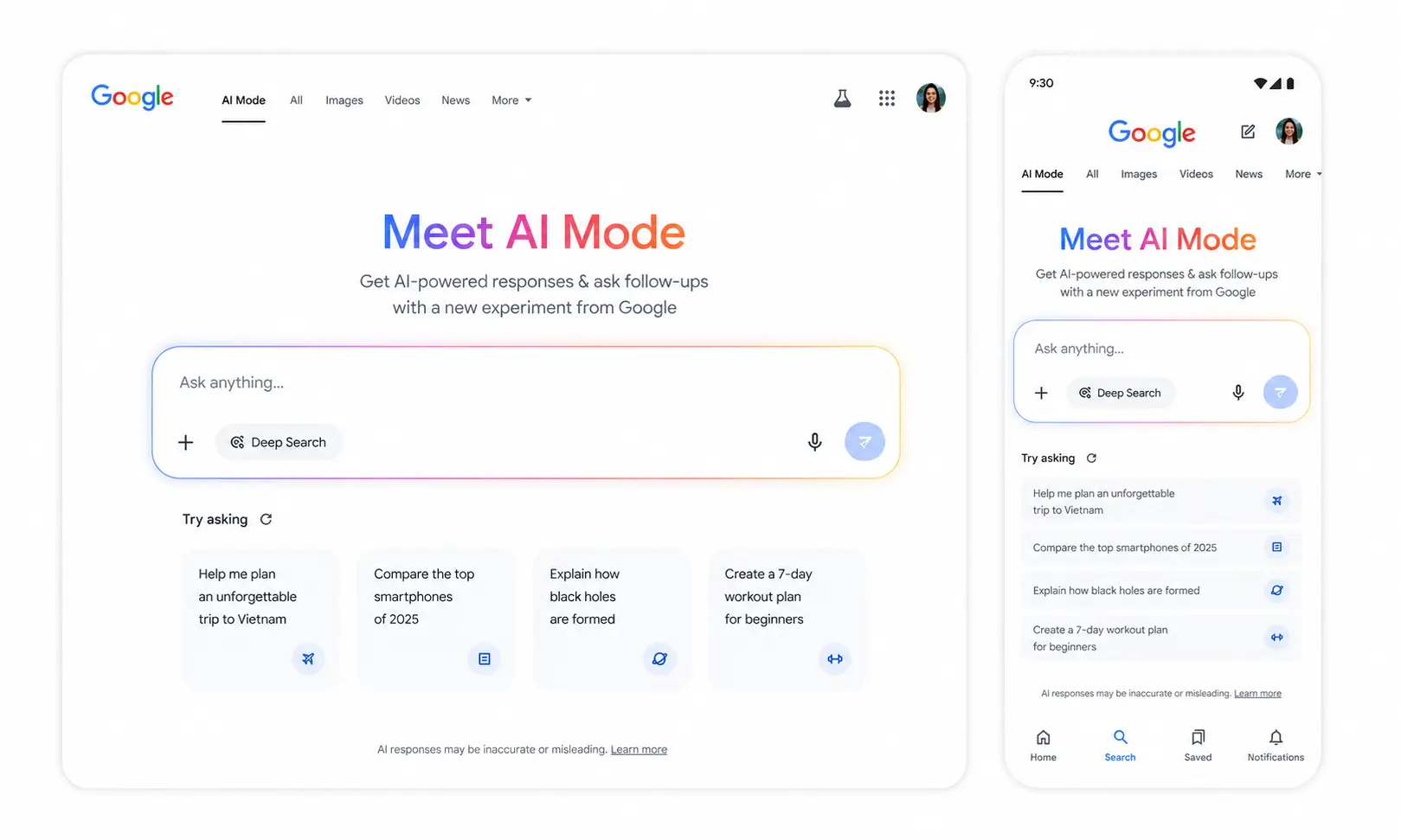
1. Intelligent Search Box
The classic single-line text field is gone. Google replaced it with what it calls the Intelligent Search Box. It expands dynamically as you type, accommodates long conversational queries, and accepts images, documents, videos, and Chrome tabs as inputs. Google search redesign explained in one sentence: the search bar is now a Gemini prompt window with a search engine running underneath it.
2. Gemini 3.5 Flash as the Default Model
Gemini 3.5 Flash default search model powers AI Mode for every user globally starting May 19. It is faster, smarter, and handles long conversational queries in seconds. AI Mode queries have more than doubled every quarter since launch. Sundar Pichai confirmed AI Mode now has over 1 billion monthly active users – just one year after it launched.
3. Background AI Agents
This is the part most SEOs have not fully absorbed yet. Google’s AI agents now run in the background 24/7, monitoring the web on behalf of users for topics they care about.
If someone sets an agent to track “apartment rentals in Bangalore under 30,000 rupees”, that agent is crawling, reading, and filtering websites continuously. Google’s AI agents are watching the web for you; it is not a headline – it is the new reality of how content gets surfaced.
4. AI Overviews and AI Mode Are Now One Experience
There is no longer a separate “AI tab”. Users flow from a normal result to a Google AI overview 2026 to a full AI conversation – all on the same page, without clicking anything. The SERP structure 2026 is one unified surface. If your content is not cited on that surface, users never see it, even if you rank on page one.
5. Personal Intelligence Went Global
Google now pulls from your Gmail, Photos, and YouTube history to personalise search results. Two people searching the same query in the same city get different answers. This was previously only for paid US subscribers. From 19 May, it works in nearly 200 countries, including India, with no subscription needed.
How Google AI Mode Affects Website Traffic: The Data for 2026
The question every website owner is asking: does Google AI Mode reduce organic traffic to websites? Yes, it matters. The impact depends on if your site is mentioned in AI answers or not.
- 1B+ monthly AI Mode users, one year after launch (Google I/O 2026)
- 48% of all Google queries trigger an AI Overview (Ahrefs, March 2026)
- 2x to 3x longer than average AI Mode query vs traditional search query
The Google Search Console impressions vs. clicks gap is widening for most sites. Impressions stay stable or grow because your pages still get indexed and referenced. But clicks drop because users get answers directly inside the AI Overview without visiting your site. Sites cited inside AI answers are the exception – they see more qualified clicks per impression, not fewer.
AI Overview’s click-through rate drop for uncited pages reached 61% on affected queries according to Seer Interactive’s 2026 analysis. The traffic did not disappear. It shifted to cited sources. That is where the opportunity sits.
AI Mode vs Traditional SEO Ranking Strategy in 2026
Understanding AI Mode vs traditional SEO ranking strategy in 2026 is the difference between adapting now and losing ground for the next two years.
| Traditional SEO (Before 2026) | AI Mode SEO (After Google I/O 2026) |
| Target short keywords | Answer full conversational questions |
| Rank in the 10 blue links | Get cited inside the AI Overview answer |
| Success = Position 1 | Success = being the source Google AI quotes |
| Traffic comes from clicks | Visibility comes from AI citations plus clicks |
| Update content once a year | Keep content fresh for 24/7 background agents |
Is traditional SEO dead in 2026? No — but it is no longer sufficient on its own. The sites that are winning in 2026 are running both strategies simultaneously. Traditional SEO keeps you in the index. AI Mode optimization gets you to the answer.
How to Rank in Google AI Mode Citations in 2026: 5 Things That Work
Here’s how to rank in Google AI Mode citations for 2026. This is based on data and the I/O 2026 announcements about how the system chooses sources.
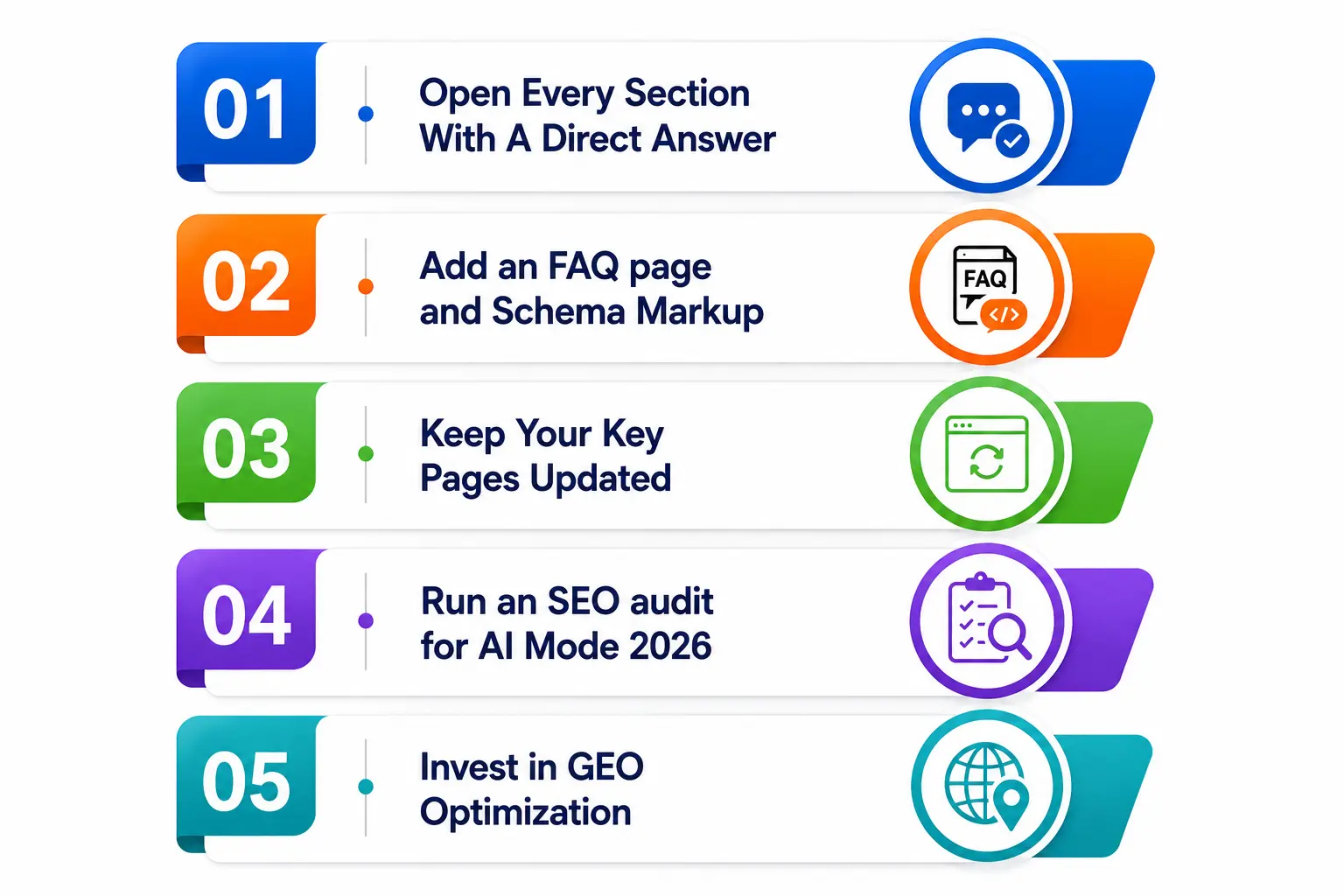
1. Open Every Section With A Direct Answer
Do not bury the answer in paragraph three. Google’s AI pulls the first clean sentence that directly answers the query. If your opening sentence is vague, your page will not be cited.
2. Add an FAQ page and Schema Markup
Schema gives Google’s AI a structured map of your content. Pages with proper schema markup are significantly more likely to appear as citations in Google AI overview 2026 answers.
3. Keep Your Key Pages Updated
Background agents skip stale content. Add “last updated” dates. Refresh your statistics. A page last edited in 2024 looks unreliable to an agent crawling in 2026.
4. Run an SEO audit for AI Mode 2026
A standard audit checks rankings and backlinks. An SEO audit for AI Mode 2026 looks at whether your pages have direct answers, schema, named authors, and topic depth. These factors decide if you’re cited or overlooked.
5. Invest in GEO Optimization
GEO optimization service 2026 helps websites get noticed by AI. It does this using schema markup, E-E-A-T signals, semantic content, entity building, and answer-focused formatting. It is rapidly becoming the most important SEO category for Google AI Overview visibility in 2026.
The Search Bar You Knew Is Gone: What Happens to Your Website Now
What happens to your website after Google AI Mode depends on one thing: whether your content gets cited in AI answers or gets skipped entirely.
- Blogs, how-to guides, and FAQ pages are hit hardest because these query types now trigger Google AI overview 2026 almost every time.
- Your page can rank on page one and still get zero clicks if it is not cited inside the AI Overview.
- The gap between impressions and clicks in Google Search Console is growing. Meanwhile, actual clicks are dropping, and many site owners don’t know why.
- AI Overviews SEO impact means the answer box above your result is absorbing the traffic that used to land on your page.
- Background AI agents now crawl your site 24/7, and stale content, outdated data, and thin pages get skipped automatically.
The fix is straightforward: restructure your content for AI citation, run an SEO audit for AI Mode 2026, and build authority signals that make Google AI search 2026 trust your pages as reliable sources.
Best SEO Strategy for AI Mode 2026: A Practical Action Plan
The best SEO strategy for AI Mode 2026 is not complicated. It requires focus on four things done consistently.
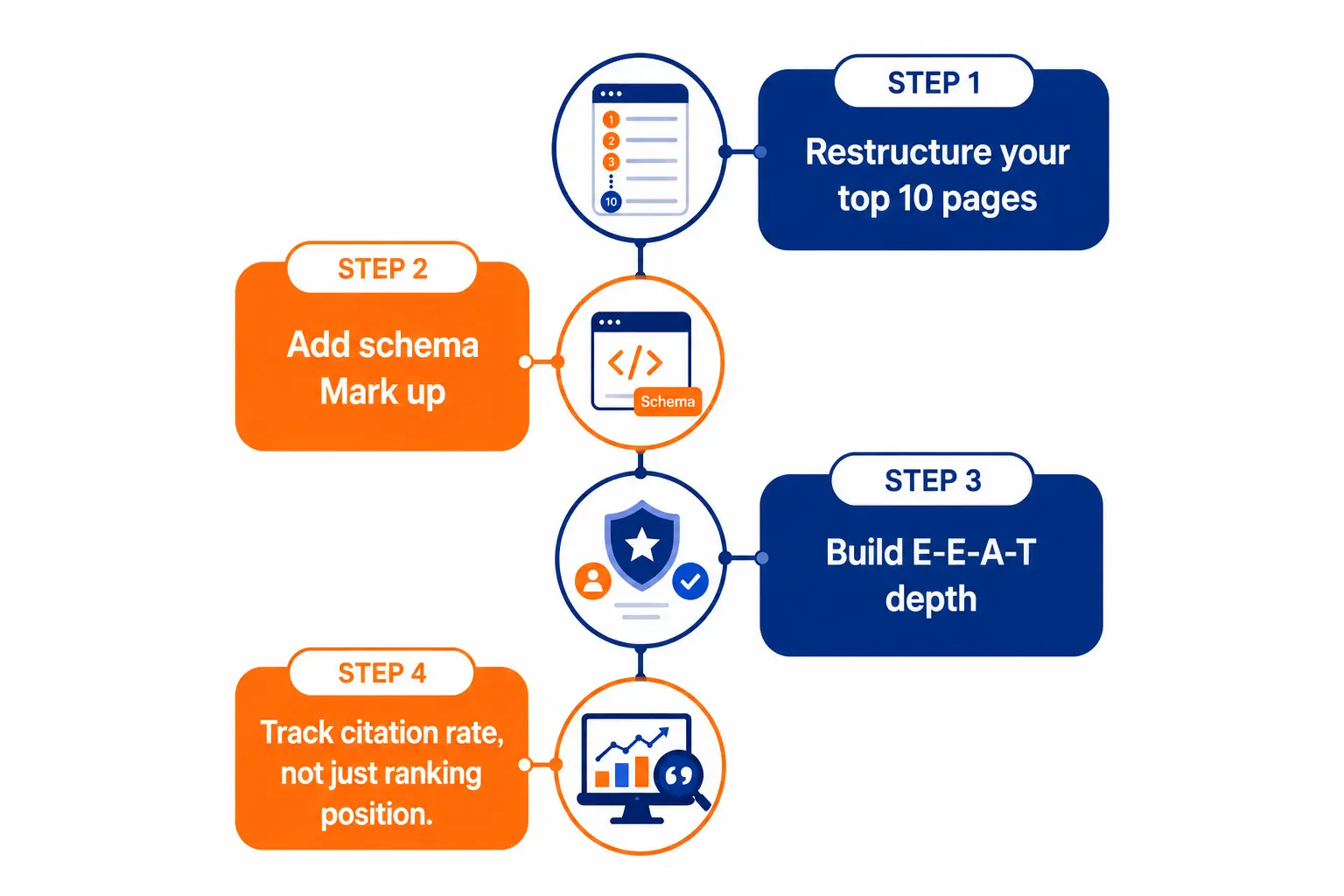
- Restructure your top 10 pages with direct-answer opening sentences and question-format H2 headings. These are the pages most likely to be cited if reformatted correctly.
- Add schema markup – FAQPage, HowTo, Article, and Organization- across your site. This gives Google’s AI a structured map of your content rather than forcing it to interpret raw HTML.
- Build E-E-A-T depth by naming authors, citing sources, and keeping factual content updated. Agents penalize stale data and reward demonstrable expertise.
- Track citation rate, not just ranking position. Search manually for your target queries and check whether your site appears in the AI Overview. This is your new primary visibility metric in 2026.
SEO is dead, or is it just evolving? It is evolving faster than at any point since Google’s first Panda update in 2011. The biggest Google search change in 25 years does not eliminate the need for great content. It raises the standard for what great content must do.
Conclusion
Google I/O 2026 did not just update Search. It replaced the model that has driven internet traffic since 1997. Google AI overview 2026 is now the first thing most users read. If your content is not structured to be cited inside that answer, your impressions will rise, and your clicks will keep falling.
The good news is the rules are clear. Direct answers, fresh content, proper schema, and real topic depth get you cited. That is what any website, large or small, can do. Mount Web Technologies helps businesses across India build content and technical SEO strategies designed for AI-first search. Book a free consultation today!
Frequently Asked Questions
Q1. What changed in Google search after I/O 2026?
Google AI overview 2026 expanded globally, the search box was rebuilt with Gemini 3.5 Flash, and AI agents now monitor the web 24/7 for users.
Q2. How does Google AI Mode affect website traffic?
Uncited pages have up to 61% lower organic CTR. Each month, the drop in click-through rates for AI Overviews increases the gap between cited and uncited pages.
Q3. What is the best SEO strategy for AI Mode 2026?
Direct-answer content, schema markup, and regular updates are the core of any best SEO strategy for AI Mode 2026 that delivers citation visibility.
Q4. How does the Google AI Mode search bar change SEO in 2026?
The new bar accepts images and files, so keyword-only optimization is now outdated. Google AI overview 2026 decides which sites are seen and which are skipped.
Q5. Is traditional SEO dead in 2026?
No, but SERP structure 2026 requires both traditional ranking and an AI citation strategy running together for any meaningful organic visibility.
Q6. How do I rank in Google AI Mode citations in 2026?
Direct answer openings, FAQPage schema, and topic depth are the three key signals for Google AI Mode citations 2026 post I/O.
Q7. What is Gemini 3.5 Flash, and why does it matter for SEO?
Gemini 3.5 Flash will power AI Mode worldwide from May 2026. It processes longer queries quicker, improving content quality and citation eligibility.