Quick Summary
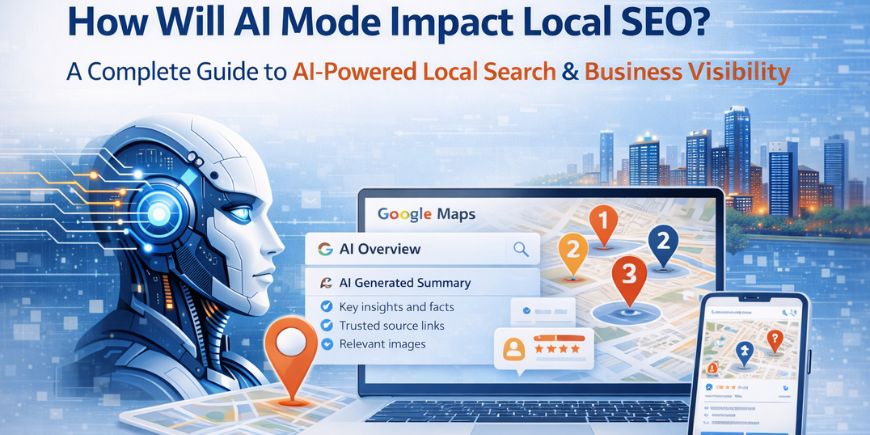
- Google AI Mode allows users to interact with search in a conversational way, where the system evaluates businesses using multiple background queries instead of simply listing blue links.
- AI-powered search reduces traditional website clicks by summarizing and citing trusted sources directly, increasing zero-click searches and shifting visibility from rankings to entity authority.
- Local SEO in 2026 prioritizes sentiment analysis, entity-based verification, Google Maps ranking signals, and structured data over keyword stuffing or simple star ratings.
- Real-world AI search impact includes hyper-local proximity filtering, review context extraction, real-time service validation, and semantic intent matching.
- To adapt, businesses must strengthen their digital footprint, implement advanced schema markup, maintain consistent NAP data, optimize Google Business Profile regularly, and build strong E-E-A-T signals.
- Partner with Mount Web Technologies, a forward-thinking local SEO company, to align your business with Google AI Mode and secure measurable local growth.
Search in 2026 looks very different from what most businesses optimized for five years ago. Industry data cited by Statista shows AI generated results and Overviews now appear in more than half of Google searches, changing how users discover brands and compare local SEO services.
Google AI Mode is reshaping how results are evaluated, displayed, and recommended. Traditional rankings still matter, but visibility now depends on credibility, structure, and context. If your local SEO optimization strategy does not adapt, even the best local SEO services may struggle to convert impressions into clicks. Let’s get started with the definition!
What Is Google AI Mode & How Does It Work?

Google AI Mode goes beyond showing a list of blue links. It analyzes intent, cross checks data, and produces summarized responses. It behaves less like a search engine and more like a research assistant.
The Mechanism of Agentic Search
- The Fan Out Logic: AI Mode issues multiple layered queries behind the scenes. Instead of checking one keyword, it evaluates related questions such as reputation, proximity, authority, pricing transparency, and service reliability. This multi query logic validates whether your business deserves to be recommended.
- The Citation Engine: Instead of showing ads, AI Mode constructs a research-style summary. If your business isn’t cited as a source, you don’t exist in that search session.
- Agentic Search: AI acts on behalf of the user. It filters options, evaluates reviews, and narrows down recommendations. For a local SEO agency or local SEO company, this means authority signals matter more than keyword repetition.
- Mathematical Meaning: Through vector embeddings, Google matches the intent of your service to the user’s problem, rather than just matching the words on your page.
The New Search Reality: Google AI Mode vs. AI Overviews
The evolution of search has bifurcated into two distinct experiences. Understanding the nuance between a summary and an assistant is critical for any local SEO agency aiming to maintain visibility in 2026.
Google AI Mode: This is a chat-based interface. Users can ask follow-up questions and interact with a digital assistant. It helps refine complex local search needs.
AI Overviews: These are AI-generated summaries that show at the top of search results. They highlight key information and cite web sources to answer questions quickly.
Key Differences: AI Mode vs. AI Overviews
To succeed in local search optimization, you must understand how your data is being used in these two different environments.
| Feature | Google AI Mode | AI Overviews (SGE) |
| User Intent | Deep research and task execution. | Quick answers and fact-checking. |
| Interaction | Conversational; remembers past prompts. | Static; refreshes per individual search. |
| Visibility | High-intent “Entity” citations only. | Mix of AI text and traditional links. |
| Local Impact | Acts as a concierge (e.g., “Book this”). | Acts as a summary (e.g., “Top 3 rated”). |
| CTR Potential | Extremely low (Zero-click focus). | Moderate (Links are still present). |
| Your Strategy | Be the most “Trusted Entity” in your area. | Be the most “Fact-Dense” source of info. |
According to 2026 marketing data from Statista, roughly 34.5% of users no longer click on websites because the AI gives them the answer directly. This makes “Brand Authority” more important than ever.
Google’s AI doesn’t just look at your website; it looks at your entire digital footprint. When it sees high-authority signals, it views your business as a real, popular, and verified entity. In the AI era, being “talked about” on social media is just as important as having a fast website.
How AI Mode Impacts Local SEO
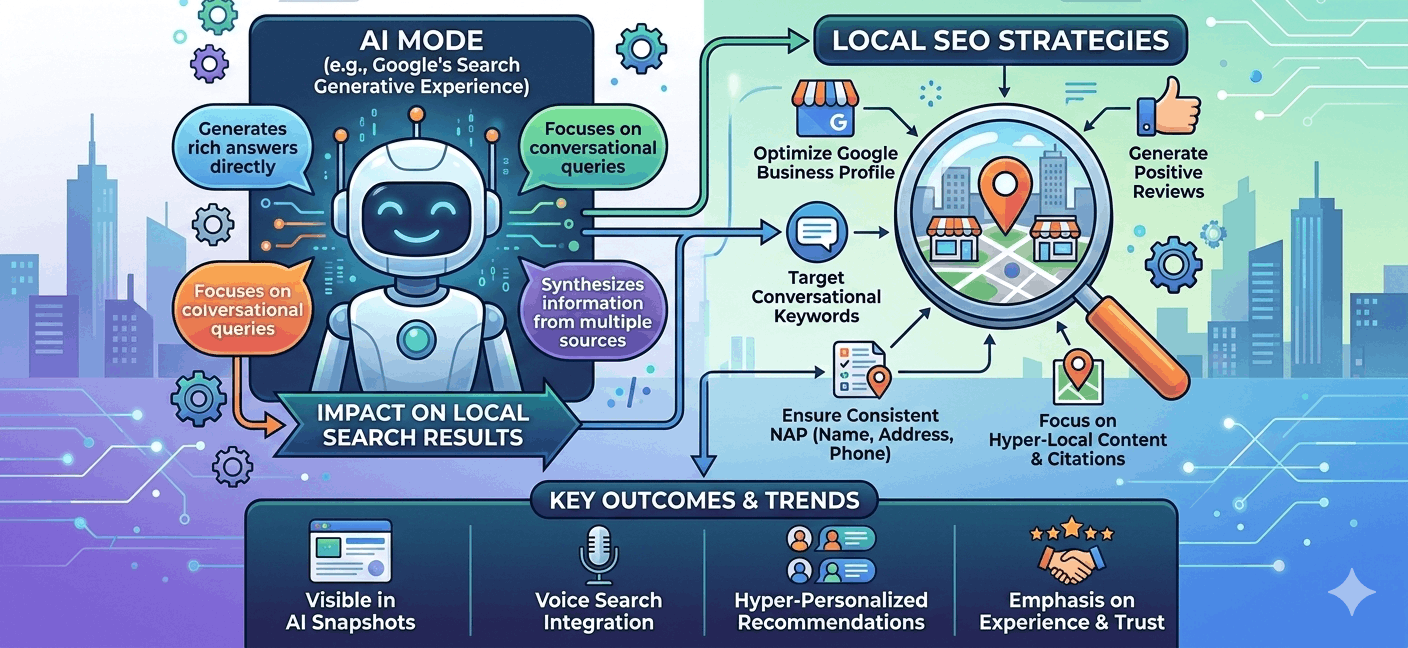
In 2026, Google AI Mode filters businesses based on real-world trust rather than just metadata. This shift changes local seo ranking factors from simple keyword matching to complex entity verification.
1. The Hyper-Local Proximity Filter
Google now uses “Agentic Search” to narrow down options by combining user intent with real-time transit data. To rank higher on Google, your business must be physically accessible within the user’s specific time-frame and travel route.
- Real-Time Logistics: AI calculates the exact travel time from the user’s GPS to your door.
- Intent Mapping: Distinguishes between “browsing” and “urgent need” (e.g., an emergency plumber).
- Transit Integration: Uses live traffic data to determine if you are a viable choice right now.
- Dynamic Radius: The search area expands or shrinks based on the density of local competitors.
2. Sentiment Analysis Over Star Ratings
A high star rating is no longer enough for the best local SEO company to promise results. AI Overviews now analyze the emotional tone and specific nouns within your reviews to determine if you truly solve the user’s problem.
- Noun Extraction: AI identifies specific services mentioned in reviews, like “fast drainage repair.”
- Emotional Weighting: Prioritizes businesses with “highly satisfied” language over generic “good” ratings.
- Conflict Resolution: Analyzes how you respond to negative feedback to measure reliability.
- The “Why” Factor: Summarizes reviews into a single sentence for the user (e.g., “People love their pricing but mention long wait times”).
3. Entity-Based Verification
Google confirms your physical existence through third-party data “Fan-Out” queries. This is the core of modern E-E-A-T signals, ensuring that a business isn’t just a “ghost” profile but a verified local authority.
- Digital Footprint Cross-Check: AI vets your info across 16+ different sources simultaneously.
- Unlinked Mentions: Counts how often your brand is discussed on local news and community blogs.
- Legal Validation: Verifies business licenses and professional certifications through public records.
4. Real-Time Inventory & Service Accuracy
In 2026, local SEO services must include live data feeds. If the AI cannot verify that you have a product in stock or an open appointment slot, it will skip your business entirely to avoid a poor user experience.
- Live API Integration: Connects your booking software directly to Google AI Mode.
- Inventory Transparency: Displays real-time stock levels for local retail searches.
- Service Availability: Shows “Next Available Appointment” directly in the AI chat interface.
- Accuracy Penalty: Drastically lowers rankings if AI discovers “Closed” status when your profile says “Open.”
5. The Decline of “Keyword Stuffing” for Local Pages
Traditional SEO services for small businesses that rely on “near me” text are becoming obsolete. AI ignores repetitive keywords in favor of “Vector Embeddings,” which understand the mathematical meaning of your service area.
- Semantic Understanding: AI knows “Brooklyn” implies “NYC” without you needing to repeat it.
- Natural Language Priority: Rewards content written for humans, not search bots.
- Geographic Context: Uses your business’s neighborhood history to determine relevance.
- Topic Clusters: Ranks you based on your total knowledge of a subject, not just a single landing page.
Looking for more calls, more walk-ins, and real growth from local search? Mount Web Technologies is the local SEO agency that puts your business directly into the AI’s conversation, turning search engines into your most powerful sales team.
[Make Your Business the #1 Choice]
How to Show Up in Google AI Mode Responses
If you are wondering how to rank higher on Google in 2026, the answer is no longer just keywords. Google AI Mode evaluates meaning, credibility, structure, and real world signals before recommending any business. Here is how to adapt your local SEO services strategy for this shift.
1. Master Semantic Intent & Conversational Context
Google AI Mode doesn’t just match keywords; it solves problems. To rank higher on Google, your content must mirror how people actually speak to their digital assistants.
- Target the “Follow-up” Query: Use a ranking google check to see what questions users ask after finding a business like yours. Answer those specific “What happens next?” questions on your landing pages.
- The “First-Sentence” Rule: AI models prioritize the first 25 words after a heading. State your fact, service, or location immediately and clearly to ensure it’s easily extracted as a citation.
2. Deploy Advanced Entity-Based Schema
Traditional local SEO services often stop at basic contact info. In 2026, entity based SEO requires deeper structured data via JSON-LD to speak the AI’s native language.
- ServiceArea & Offer Schema: Explicitly define your boundaries and current pricing. This helps the AI “fan-out” and match you to hyper-local searches.
- SameAs Property: Link your website to high-authority social profiles and local registry citations. This connects the dots for the AI, proving that the business on Instagram is the same one on Google Maps.
3. Strengthen AI-Specific E-E-A-T Signals
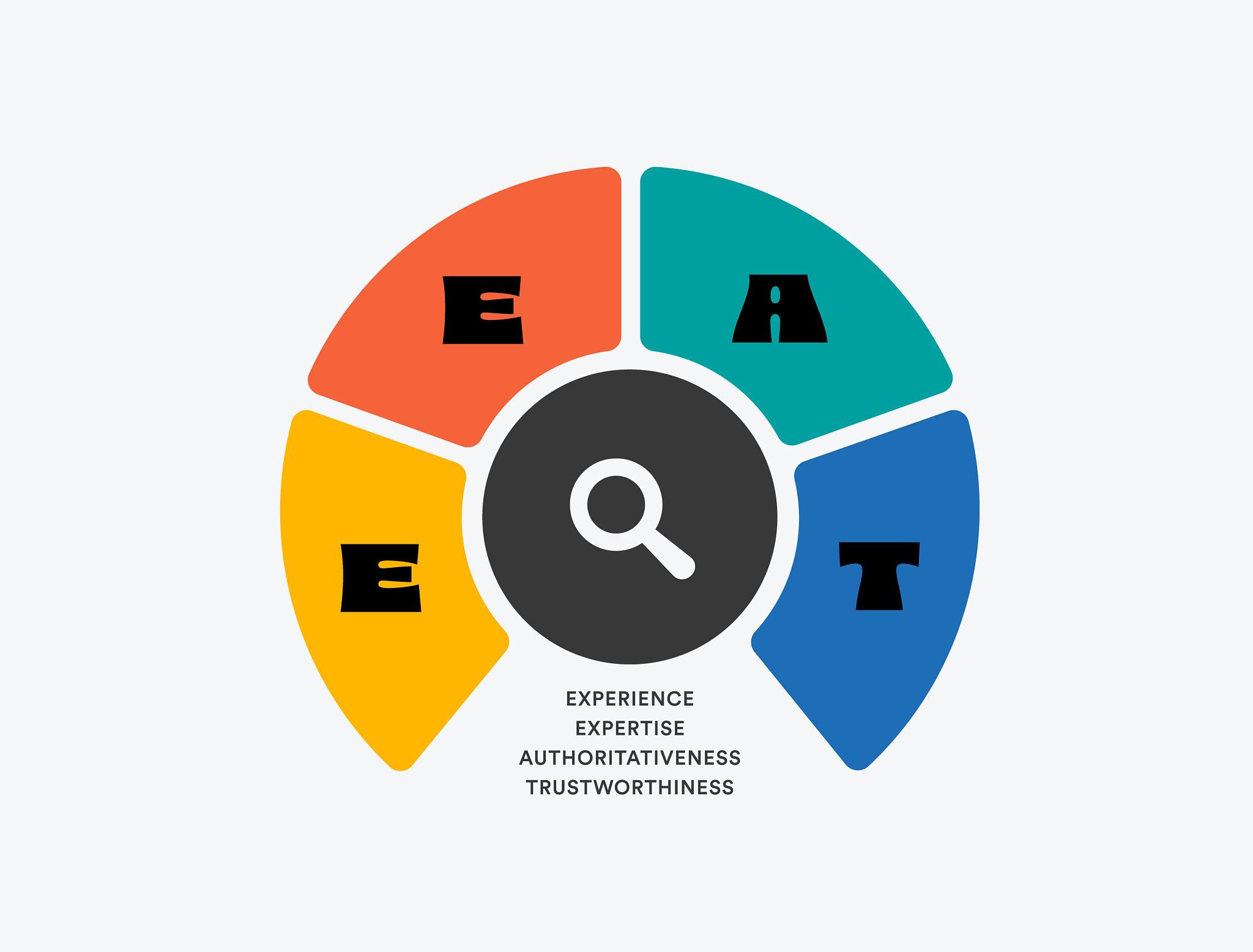
Google’s 2026 core updates prioritize “Proof of Life.” E-E-A-T signals are now measured by how much the “real world” interacts with your brand.
- Verified Mentions: AI prioritizes brands discussed on neutral, third-party platforms. High-quality social signals act as a “trust bridge” for the AI.
- Data Freshness: AI Mode hates outdated info. Update your service lists and business hours monthly to maintain your “Reliability Score.”
4. Optimize for the “Fan-Out” Logic
When a user asks for a recommendation, Google issues 16 background queries to vet you. If your information is inconsistent across the web, you lose.
- Information Symmetry: Ensure your NAP (Name, Address, Phone) and service list are identical across every directory, social platform, and map service.
- Topic Clusters: Don’t just list a service; explain the process. A comprehensive “How it Works” section helps you get cited when the AI performs sub-searches on your industry.
5. Secure Google Maps Ranking Signals
The map pack is now an interactive 3D interface within the AI. To stay visible, your Google Maps ranking signals must go beyond proximity.
- Photo Intelligence: Upload AI-readable photos of your storefront and staff. Google’s Vision AI scans these to verify you are a legitimate, high-quality local establishment.
- Review Keywords: Encourage customers to mention specific services in their reviews. The AI uses these as “tags” to categorize your expertise.
The 2026 Local SEO Checklist: Action Plan
Step 1: Perform a “Ranking Google Check”
Don’t just check your position. Check how the AI describes you. Ask Gemini, “Who is the best [Your Service] in [Your City]?” If you aren’t the answer, identify which competitor the AI is citing and why.
Step 2: Audit Your Digital Footprint
Inconsistent NAP (Name, Address, Phone) data is the #1 reason AI rejects a business. Ensure every directory, from Yelp to local Chamber of Commerce sites, has identical information.
Step 3: Shift to “Zero-Click” Content
Optimize your Google Business Profile (GBP) as if it were your homepage. Post updates daily, answer FAQs with fact-dense sentences, and upload high-quality photos. The goal is to provide enough value that the user doesn’t even need to visit your site to decide to hire you.
Mount Web Technologies Approach: Local SEO Excellence for AI Mode
At Mount Web Technologies, we recognized that 2026 search is won by “Entities,” not just keywords. As a leading local SEO company, we shift from writing for engines to “feeding the AI.” Our semantic local SEO services ensure your business stands out as a verified authority.
Our Strategic Framework for AI Dominance
- The Entity-First Blueprint: We don’t just build backlinks; we build Brand Authority. By creating a web of verified mentions across social platforms and local news—including high-engagement content, we ensure Google’s “Fan-Out” logic identifies you as a trusted leader.
- Vector-Based Content Optimization: We rewrite your service pages to match the mathematical “meaning” behind AI queries. This ensures that even if a user doesn’t use your exact keywords, the AI understands your intent and recommends you.
- Schema Architecture 3.0: We deploy advanced, nested JSON-LD structured data. This acts as a direct data feed to Google AI Mode, providing the “Fact-Dense” evidence the algorithm needs to generate an AI Overview about your business.
- Sentiment & Reputation Management: Since AI Mode prioritizes what reviews say over just the star rating, we implement strategies to encourage “keyword-rich” customer feedback that highlights your specific expertise and reliability.
Ready to dominate the AI-driven search era? Book your strategy call with Mount Web Technologies today to transform your business into a verified local authority.
Final Thoughts
Search in 2026 is no longer about who ranks first. It is about who gets cited, verified, and recommended inside Google AI Mode. Local visibility now depends on entity authority, sentiment strength, structured data, and consistent digital signals. Businesses that adapt their local SEO services to this AI driven reality will gain trust, visibility, and measurable growth.
If you want your business to be the name Google mentions first, Mount Web Technologies is ready to help. As a forward thinking local SEO company, we build AI ready local SEO services designed for authority, credibility, and real leads. Book your strategy session today and turn search into your strongest sales channel.
Frequently Asked Questions (FAQ)
Does Google AI Mode still use my website for data?
Yes, but it “scrapes” for facts rather than sending users to read your pages. Your site must be technically sound and structured for AI readability.
How often should I update my Google Business Profile?
In 2026, daily updates are recommended. Real-time data signals to the AI that your business is active and reliable.
How does AI Mode work?
Google AI Mode looks at what users want. It runs several background queries, checks data from different sources, and creates conversational responses. It prioritizes verified entities, review sentiment, structured data, and real-world credibility before suggesting a business.
How do you access Google AI Mode?
AI Mode is integrated directly within Google Search. When enabled for your region, you can access it through the search interface where AI powered conversational responses appear instead of traditional link lists.
How does AI Mode impact search?
AI Mode reduces dependency on blue links and increases zero click interactions. Instead of browsing multiple websites, users receive summarized recommendations, which makes authority, trust signals, and structured data more important than position alone.
How do you prepare for AI Mode?
Focus on entity consistency, structured data implementation, detailed reviews, updated Google Business Profile information, and fact based content. AI evaluates credibility across your entire digital footprint, not just your website.
What is Answer Engine Optimization (AEO)?
Answer Engine Optimization is the practice of structuring content so AI systems can extract direct, factual responses. It emphasizes clarity, conversational intent, and concise explanations that match how users ask questions.
What replaces traditional backlinks in the AI era?
Backlinks still matter, but verified brand mentions, review sentiment, entity consistency, and cross platform authority signals now carry equal weight in AI driven ranking systems.
How does AI Mode affect local SEO strategies for small businesses?
AI Mode prioritizes proximity, review context, structured data, and verified business signals. Small businesses must focus on trust, service clarity, and digital consistency to remain competitive in local search results.
How will AI-powered search features change local business visibility?
Visibility shifts from ranking position to recommendation inclusion. Businesses cited in AI responses gain higher trust and conversion potential than those simply listed in traditional search results.
Can AI-driven local SEO platforms increase foot traffic for retail stores?
Yes. Accurate business data, current hours, review quality, and a well-optimized Google Business Profile increase the chances of recommendations. This directly influences walk-ins and in-store visits.
What AI-powered tools improve local SEO rankings effectively?
Google Search Console, GA4, structured data validators, local rank tracking tools, and AI content analysis platforms work together. They monitor performance closely and help improve your online presence. They enhance visibility on Google AI Mode and Maps.
Find a service that uses AI to manage Google Business Profile listings?
Look for agencies that integrate automation, structured data, review monitoring, and real time updates into Google Business Profile management. AI assisted workflows improve accuracy and response consistency.
Which companies offer AI-based local SEO optimization services?
Mount Web Technologies offers local SEO services focused on AI. These services boost entity authority, enhance review sentiment, and help businesses meet Google AI Mode visibility standards. Get in touch to build your AI ready strategy.