Digital Marketing

Best White Label SEO Software and Tools for Agencies in 2025

Best White Label SEO Software and Tools for Agencies in 2025

In today’s fast-moving digital world, agencies rely on white-label SEO services to meet growing client demands without extra resources. In fact, 68% of agencies now use white-label solutions to expand their offerings while keeping costs low. These services allow agencies to provide the best SEO services under their own brand, boosting client trust and business growth. The global SEO market is expected to reach $122 billion by 2028, making it more important than ever for agencies to have the right tools. Advanced white-label SEO services offer automated reports, keyword tracking, and competitor analysis, helping agencies streamline their work and deliver real results. Choosing the right SEO software is key for agencies looking to scale their services and improve client satisfaction. Top platforms like Moz and SEMrush provide AI-powered tools, automated workflows, and customizable dashboards. With the best SEO services, agencies can enhance their brand, improve efficiency, and stay ahead in the competitive SEO industry. So, let’s discover the best white-label SEO software to streamline operations, impress clients, and increase your revenue in 2025. What is White-Label SEO Software? White-label SEO software provides agencies with the capability to rebrand and offer SEO services under their own name. Agencies can utilize a fully customizable pre-built platform instead of investing time and money in developing proprietary software. Clients get branded reports and dashboards, strengthening your agency’s credibility and maintaining operational efficiency.  These platforms frequently come with capabilities necessary for growing your agency’s offerings, such as link management, competition analysis, keyword tracking, white label SEO audit tools, and performance reporting. Below is a list of key SEO services that every robust SEO software should provide: Rank Tracking: Tracking a page’s ranking for a specific keyword in a chosen location or worldwide, considering whether users are on a desktop or mobile device. Citation Monitoring: Make sure a business’s name, address, and phone number (NAP) are the same across all listing directories. Tracking Customer Reviews: Understanding what customers think by monitoring online reviews. Automated Reports for Clients: Collecting keyword rankings and performance data in one simple dashboard. Checking Website Links: Review backlinks to spot issues or opportunities for improvement. How Agencies Benefit From White Label SEO Software Here’s why top agencies prefer white-label SEO features instead of standard reports from regular SEO tools: Flexible Customization: Many well-known SEO solutions only offer a small number of customization choices, which leads to impersonal or generic reports. White-label SEO solutions help you focus on key facts and skip the less important ones. This way, you can tailor insights and KPIs to fit your clients’ goals. Boosts Brand Identity: By adding your logo and branding to reports, customers will see your agency as the main source of insights. This way, they focus on you instead of the third-party platforms you use. This establishes your agency as an authority rather than a reseller, strengthens your knowledge, and fosters confidence. Reduces Reporting Time: White label Time-consuming processes like data collecting and report production are automated by SEO software. When these procedures are streamlined, time may be better spent on high-value tasks like strategy and client interactions. Provides a Seamless Customer Experience: A more consistent customer experience is produced by using a single platform. It reduces friction, speeds up how quickly clients can enroll, and uses one interface instead of several tools. Reduces Errors: Compiling data from many tools by hand into reports is a certain way to make mistakes. A misaligned graphic or a misplaced number can create confusion, reduce customer trust, or even threaten your credibility. White-label SEO solutions save time by automating data aggregation and guaranteeing accurate, error-free reports. Promotes Scalability: Automated scheduling and centralized reporting help agencies manage many customers easily. White-label products simplify operations for those overseeing dozens or even hundreds of clients. Scaling your processes is significantly easier with these features. Top 6 White-Label SEO Software Tools for Agencies Choosing the best white-label SEO software can change how businesses handle customer relations, report delivery, and performance monitoring. Here is a thorough analysis of the top white-label SEO systems, each of which has strong features to support the growth and success of your company.   1. SE Ranking If you’re looking for a white-label website audit tool that feels like your own, SE Ranking is a great choice. You can add your agency’s logo to SEO reports and audits and even customize colors and themes to match your brand. A complete domain tracking solution with daily website rankings and updates is also available. With SE Ranking SEO software, you can track your client’s organic traffic, backlinks, and page trust rankings. This helps you spot areas that need improvement for better search rankings. The tool is ideal for agencies that are interested in general SEO rather than simply content optimization. The primary features of SE Ranking include various website assessments, traffic statistics, and competition research semantics.  Best for –Agencies looking for tools to track insights and analyze competitors. Starting monthly price – From $52/month Free trial – Available (14-day free trial) Top features – Semantic analysis, customizable white-label branding, including logos, colors, and themes. Pros Powerful competitor analysis with a semantics tool Fully customizable white-label solution with logo and theme options Ideal for tracking SERP rankings and search visibility Cons Extended historical data is available only in higher-tier plans. It’s not the ideal choice for content-related searches. 2. BrightLocal BrightLocal stands out for its flexibility, making it a great agency choice. You can use it just for listings with tools like Citation Builder, Active Sync, and GBP Post Scheduler. They even offer custom plans for agencies needing specific white-label reports or managing multiple locations. Why is BrightLocal among the best SEO services for agencies? Its Local Search Grid helps agencies grow existing clients by identifying low-ranking locations that need improvement. Like SE Ranking, BrightLocal also offers listings, on-page SEO tools, and review management. It shares business data with five main Local Data Aggregators: Data Axle, Neustar Localeze, Foursquare, Yellow Pages Network, and GPS Network. This action enhances local citations.

How to Rank on SearchGPT & AI Platforms

How to Rank on SearchGPT & AI Platforms: A Comprehensive Guide

Imagine missing out on nearly half of your potential customers, not because of Google’s rankings but because AI-powered search engines cannot find you. Now, 45% of users are choosing AI tools such as Perplexity.ai, Claude, and Bing AI instead of regular search engines. This change is quickly transforming how people search for information. These platforms do not just list websites. They generate real-time answers and prioritize content that aligns with their ranking standards. AI search engines already handle over 10 billion queries every month, shifting how businesses are discovered. Google is still the leader, but SearchGPT tools using large language models are changing the game. Now, traditional SEO alone isn’t enough. Companies that focus on AI-driven search are experiencing up to 230% annual growth. They are entering a rapidly growing $200 billion AI market. This is not just another algorithm update. Brands that master AI search ranking see up to three times more organic traffic. If you want to future-proof your strategy and ensure your business thrives in this AI-first search era, now is the time to adapt. This blog will explore how AI search engines rank content and share actionable steps to keep you ahead. What is SearchGPT? SearchGPT, developed by OpenAI, is a revolutionary search engine. It combines the advantages of conventional search engines with state-of-the-art generative AI functionalities. This AI-powered search engine intends to transform the way individuals discover and engage with information. While typical search engines like Google and Bing offer links to explore, SearchGPT emphasizes providing direct answers, resulting in a more conversational and efficient experience.  SearchGPT stands out because it uses real-time data from trusted sources. This gives users a broad range of information. This approach can substantially reduce the time required to find answers, in contrast to conventional search methods. SearchGPT enhances the user experience with a chat-like interface. This lets users have back-and-forth conversations. Unlike Google, where users might return to the search bar for clarification, SearchGPT feels more interactive and responsive. It aims to grasp the user’s intent and quickly offer more information. This could set a new standard for AI-driven searches. Boost AI Search Engines with Powerful SEO Strategies for SearchGPT  1. Focus on Natural Language and User Intent Optimization SearchGPT SEO works best when your content matches how people talk, not just how they type. AI search engines focus on natural, long-form questions. Instead of using short keywords like “AI SEO tips,” try creating content around “How can I improve my website ranking on SearchGPT?” Use tools like Ubersuggest or Google’s “People Also Ask” to find popular questions. Write in a clear, friendly way and use question-style headings like “How is SearchGPT SEO different from Google SEO?”  Example: A fitness brand boosted its AI search traffic by 175% by optimizing blog titles for phrases like “SearchGPT SEO: How to make my fitness website show up in AI search.” 2. Focus on Detailed and Long-Lasting Content AI search engines favour in-depth content. A 2,500-word guide, like “The Ultimate Guide to SearchGPT SEO,” will rank better than a 700-word post because it thoroughly covers key subtopics. Follow the 20% Rule: Dedicate 20% of your content to niche subtopics, such as “How Schema Markup Improves SearchGPT SEO.” This helps AI search engines understand your content better. Keep Content Fresh: Update your content every 3 months. AI search tools prefer recent sources, and pages updated within 90 days get 40% more citations. Example: A travel website saw a 180% boost in SearchGPT traffic after adding real-time flight price trends and destination-specific SEO strategies to its blog. 3. Use Structured Data and Knowledge Graph To rank well on SearchGPT, make your content easy for both users and AI to understand. Use schema markup to highlight important sections like FAQs, how-to guides, and key definitions. Add FAQ schema for common searches (e.g., “How to get featured in SearchGPT results”). Link-related content to strengthen connections (e.g., link “SearchGPT SEO” to “Voice Search Optimization”). Keep your LinkedIn company page updated—AI search engines cross-check data from trusted business directories to confirm credibility. 4. Focus on Technical SEO for AI Crawlers AI search engines prefer fast and mobile-friendly websites. If your Core Web Vitals score is below 50, SearchGPT may ignore your page 60% of the time. Aim for a 90+ PageSpeed score using tools like LiteSpeed Cache or NitroPack. Fix broken links and 404 errors—they reduce trust with AI crawlers. Use responsive design since over 70% of AI-driven searches happen on mobile. 5. Build AI-Focused Visibility Traditional backlinks are becoming less important for SearchGPT SEO. Instead, focus on getting mentioned by trusted sources that AI search engines rely on. Write guest posts for websites that AI models learn from, like HubSpot or Search Engine Journal. Collaborate with industry experts whose content appears in AI-driven search results. Submit your sitemap to AI-friendly databases like Google Dataset Search to boost visibility. Building credibility with sources AI trusts makes your content more likely to rank higher in SearchGPT results. 6. Establish Strong Expertise and Trust (E-E-A-T) Google’s E-E-A-T (Experience, Expertise, Authoritativeness, and Trustworthiness) is key for SearchGPT SEO, but AI search engines take it further. They check author credibility, citations, and domain reputation to filter out unreliable content. Highlight author credentials in content (e.g., “Written by Sarah Lee, an AI SEO expert with 8+ years of experience.”) Link to trusted sources like research papers or government websites—for example, CDC sources help health blogs rank better. Share original research or case studies. Websites that publish unique data get 50% more AI citations and higher rankings. 7. Boost Engagement and User Interaction AI search engines prioritize content that keeps users engaged. High dwell time, low bounce rates, and interactive elements signal quality to SearchGPT SEO services. Add interactive elements like polls, quizzes, or chatbots to encourage engagement. Improve readability with short paragraphs, bullet points, and simple language. Encourage social sharing and discussions—AI considers popular content more valuable. The more users engage with your content, the higher it ranks on SearchGPT & AI

SEO content strategy

How to Prioritize User Intent in Your SEO Content Strategy for 2025

The foundation of a successful SEO content strategy in the broad field of search engine optimization (SEO) is knowing and prioritizing user intent. Customizing your content to your audience’s preferences and needs is more important than ever as we go into 2025. Tracking rankings, algorithms, and keyword stuffing may easily lead to distractions. The reality is that consumers, not rankings, are what pay the bills. If your SEO material doesn’t address the demands of actual people, you’re falling short. So, how do you make sure your SEO content strategy is on point in 2025? It all comes down to one key factor – user intent. How can you create content that truly meets your audience’s needs? In this blog, we’ll share simple strategies for crafting optimized content that not only ranks well but also connects with your readers. With the help of the best digital marketing agency, you can boost your digital presence to be both impactful and insightful. What is SEO Content Strategy? SEO content strategy focuses on creating and refining content to increase the ranking and ranks of your website in search engine results pages (SERPs). Like a road map, it helps you create content that is relevant to your audience and friendly to search engines. It aligns your work with your SEO goals.  Let’s get right to the point: companies looking to improve their online visibility and attract more natural visitors must have a strong SEO content plan. Most internet searches start with a search engine query. So, it’s smart to create content that ranks well for relevant keywords. This strategy helps businesses in several ways. They increase their visibility, connect with a larger audience, and draw in more quality leads to their websites.  Businesses benefit from a successful SEO content strategy: Boost search visibility: High-quality, keyword-optimized content improves rankings for relevant searches, helping potential customers discover you online more easily. Boost organic traffic: More clicks from search results come from better search rankings, increasing traffic to your website. Boost user engagement: Offer helpful, educational content that meets your audience’s needs. This keeps users interested and encourages them to spend more time on your website. Increase conversion rates: Higher conversion rates, whether for purchases, form completion, or email subscriptions. This can result from content that successfully leads your audience through their path. To get your SEO content strategy right, create content that connects with your audience while also ranking well on search engines. This includes doing keyword research, using SEO reseller services, and writing valuable, high-quality content. Follow on-page SEO best practices to drive the best results! A solid SEO content strategy can improve your online presence. It can also attract more targeted visitors and boost your digital marketing results. This is particularly important for B2B businesses using content marketing to generate high-quality leads and develop thought leadership. At Mount Web Technologies, we also offer B2B marketing that takes your business to new heights. Connect with our experts today! Understanding User Intent in SEO Content Strategy Understanding how SEO principles and user intent interact is important before developing a successful content strategy. Each enhances the others, making your content more useful and visible. User intent reveals the reason behind every search query. Whether someone searches for “affordable web design” or “tips for increasing website traffic,” their intent determines the type of content that will meet their needs. Understanding and aligning with this intent is key to creating content that attracts and converts. User intent usually divided into three primary categories:   Informational: Users look for solutions or gain knowledge about a subject. For instance, a prospective customer may look up “What is local SEO?” to learn more about how local SEO services may raise their company’s profile. Another example is “How to improve website speed for SEO,” which suggests an interest in technical SEO information. Navigational: Users search for a specific brand or service. For example, someone looking for a “white label SEO reseller” or “top digital marketing agency” wants to learn more about that company or visit their website. Understanding this intent helps businesses attract the right audience. Transactional: Users are ready to take action, whether hiring a service or purchasing. For example, searches like “SEO reseller service near me” or “hire a digital marketing agency for e-commerce SEO” show they are looking for a trusted provider. This is the perfect time for businesses like The Ad Firm to connect with potential clients. Businesses may engage people at different intent phases by customizing their content to fit each objective. Creating valuable content can build authority. This includes blog posts on the benefits of ethical SEO and guides for making engaging PPC ads. Regarding navigational intent, ensuring our website is user-friendly and maximizing branded keywords guarantees that consumers will discover what they need fast. Lastly, creating custom landing pages with strong calls to action and testimonials builds trust. This helps turn visitors into customers for buying purposes. How to Implement an SEO Content Strategy for User Intent Below, we break down the steps to creating an SEO content strategy that matches user intent, helping you attract more visitors and boost conversions. 1. Establishing a Solid Research Foundation The first step in building a strong foundation is thorough research. With a comprehensive grasp of user behavior and keyword analytics, organizations can produce content that appeals to their audience and performs well in search results.  Performing Keyword Research with User Intent in Focus Keyword research is key for both SEO and local SEO. But it’s not just about finding popular keywords – it’s about matching them to user intent for better engagement. Key steps for effective keyword research: Know Your Audience: Recognize your audience’s needs at every stage of their journey. Examine Search Intent: Assess whether a keyword serves an informational, navigational, or transactional purpose. Utilize Advanced Tools: Take advantage of tools such as Google Keyword Planner, Ahrefs, and SEMrush to discover new opportunities. For example, keywords like “SEO reseller service” focus on transactional intent, while phrases like “how

Key Digital Marketing Strategies for Businesses in 2025

Key Digital Marketing Strategies for Businesses in 2025

In just a few short years, digital marketing as we know it will look entirely different. New innovations, shifting consumer behaviors, and emerging platforms are reshaping how businesses interact with their audience. But here’s the catch — only those who adapt quickly will thrive, and those who don’t will risk being left behind. To stay ahead in this evolving landscape, businesses must embrace new strategies and technologies. Our in-depth guide on Digital Marketing in 2025: Your Roadmap to Success explores the key trends and strategies you need to implement now to future-proof your marketing efforts. Why Strategy is Important in Digital Marketing 1. Clear Direction and Purpose A digital marketing agency provides a key element in your digital marketing strategy, serving as the GPS for your business in the digital world. Without it, you could easily get lost amid the vast sea of online opportunities. A well-defined strategy ensures that all your marketing efforts are directly aligned with your business goals—whether you’re aiming to increase brand awareness, drive more website traffic, generate high-quality leads, or boost sales. When your team understands the bigger picture and the purpose behind each campaign, they can make focused, intentional decisions rather than chasing trends or wasting resources on unrelated activities. A clear strategy helps you answer essential questions like: What is our core goal? Who is our target audience? What action do we want our audience to take? How do we track success? This clear direction helps eliminate confusion, keeps your team aligned, and ensures that every marketing dollar and hour spent is moving you closer to your objectives. 2. Optimized Resource Allocation In an environment where marketing budgets and time are often limited, optimizing resources becomes crucial. A well-planned strategy allows businesses to efficiently allocate their budgets, talent, and efforts, ensuring that resources are directed where they will have the greatest impact. By pinpointing the most effective digital channels (whether it’s SEO, social media, Google Ads, or email marketing), you can avoid the trap of spreading yourself too thin. Instead of wasting resources on a scattershot approach, a digital strategy helps businesses prioritize high-impact activities that contribute directly to their KPIs. Whether you’re investing in content marketing, influencer partnerships, or paid ads, a strategy enables you to allocate funds to the most effective tactics for your target audience and goals. This resource efficiency ensures you get the highest return on investment (ROI) from your marketing spend.By incorporating digital advertising services, you can further streamline your efforts and make sure that every dollar is working hard for your 3. Data-Driven Decisions The digital world generates an abundance of data. However, simply having access to data isn’t enough—it’s how you use it that makes a difference. A successful digital marketing strategy is driven by data and powered by insightful analysis. By leveraging tools like Google Analytics, social media insights, and customer feedback, businesses can track performance, measure the success of their campaigns, and adjust tactics in real-time to optimize results. Utilizing digital marketing services for small business can provide the necessary expertise to effectively analyze this data. A data-driven strategy enables businesses to: Identify which channels and campaigns are generating the best ROI. Understand customer behavior and preferences. Fine-tune targeting, content, and messaging to improve conversion rates. Quickly pivot when necessary based on analytics and market changes. Ultimately, relying on data allows you to make smarter, more informed decisions—removing guesswork and improving the accuracy of your marketing efforts.For example, conducting keyword research is a crucial aspect of this process, helping businesses find the right keywords to target and enhance SEO strategy. See our blog on Keyword Research 2025 and discover how effective keyword strategies can boost your SEO and marketing efforts. 4. Consistency in Branding and Messaging In today’s digital age, consumers interact with brands across numerous touchpoints, from websites and social media to email campaigns and paid ads. For your business to stand out, consistency is key. A strong digital marketing strategy ensures that your brand messaging, tone, and visual identity remain consistent across all channels. When your messaging is consistent, customers feel more connected and familiar with your brand. This helps to build trust, which is vital in fostering long-term relationships and brand loyalty. Whether it’s a social media post, an email newsletter, or a landing page, your customers should experience a seamless, unified brand presence that reflects your values and resonates with their needs. A strategic approach to digital marketing helps you maintain coherence and uniformity in your messaging, making it easier to nurture customer relationships and grow brand advocacy. 5. Adaptability to Market Changes The digital marketing landscape is dynamic, with new technologies, platforms, and trends emerging regularly. If you’re not adaptable, your business could quickly become obsolete. A strong strategy allows for flexibility and adaptation—so your business can stay ahead of the curve. Having a strategy means that you’re prepared to evolve with shifting market conditions. Whether it’s adjusting to algorithm changes on Google, exploring new platforms like TikTok, or embracing AI-driven marketing tools, a strategic framework enables businesses to pivot quickly while staying aligned with their overall objectives. For example, with the rise of voice search and AI-powered tools, businesses will need to shift their content strategies to ensure they’re still discoverable and engaging on new platforms. Your digital marketing strategy should be able to evolve with technological advancements and changing consumer behaviors. To stay on top of these changes, it’s essential to understand how Google’s algorithms work and how to adjust your approach accordingly. Check out our blog on Master Google’s Algorithm: 9 Actionable Steps to Improve Your Google Rankings in 2025 to gain insights on how to refine your SEO strategy for the evolving digital environment.  6. Data-Driven Decision Making Data-driven decision-making is essential for optimizing your marketing efforts and ensuring that your strategies are effective. By closely tracking key performance indicators (KPIs) such as website traffic, conversion rates, social media engagement, and customer lifetime value, businesses can gain valuable insights into the success of their

Digital Marketing in 2025 Your Roadmap to Success

Digital Marketing in 2025: Your Roadmap to Success

Imagine being able to reach millions of potential customers around the world, 24/7, with just a few clicks. What if you could target your ideal audience with pinpoint accuracy, speaking directly to their needs, interests, and desires? What if you could track your results in real-time and adjust your strategy to achieve maximum impact? Sounds like a marketer’s dream, right? Welcome to the world of Digital Marketing—a dynamic, ever-evolving landscape that’s completely transforming the way businesses connect with consumers. But here’s the most exciting part: it’s not just for big corporations. With the right tools and strategies, any business can tap into the limitless potential of digital channels to drive growth, engagement, and sales. So, what exactly is digital marketing, and how does it work?  What is digital marketing ? What if I told you that in just a few simple steps, you could unlock a world of opportunities to grow your small business—without the need for a massive budget? Picture this: reaching the perfect audience, increasing your visibility, and driving leads, and sales, all from the comfort of your laptop. Sounds too good to be true? Well, it’s not. It’s called Digital Marketing. But here’s the catch—digital marketing isn’t just about posting a picture on Instagram or running an ad on Google. It’s a strategic approach that can completely transform the way you engage with your customers, build your brand, and scale your business. And the best part? There are digital marketing services for small business that are affordable, effective, and tailored to meet your unique needs. How Does Digital Marketing Work? The beauty of digital marketing lies in its ability to connect businesses with their target audience using data-driven strategies and digital platforms. At its core, digital marketing is all about reaching people where they spend most of their time—online—and delivering your message in ways that resonate with them. key components that drive the power of digital marketing: 1. Building a Digital Presence To kick things off, your business needs a solid digital presence. This includes a website, social media profiles, and other online touchpoints that make your brand accessible to potential customers. Whether it’s your website, Facebook page, or Instagram account, these digital channels become the foundation for all your marketing efforts. Want to Boost Your Online Presence with Social Media?Read Blog to discover proven tips and tricks that’ll elevate your social media game today! 2. Targeting Your Audience One of the most powerful features of digital marketing is targeting. Unlike traditional marketing methods, where your ads might be seen by people who aren’t interested, digital marketing allows you to target specific demographics—age, gender, location, interests, behavior, and even online activities. This means your marketing budget is spent much more efficiently, reaching only those who are most likely to engage with your business. For example, if you’re a local bakery, you might focus your efforts on users in your city who have shown an interest in food, cooking, or local events. With the help of a digital marketing agency, you can tailor your ads and content to ensure it reaches your ideal customer. 3. Content Creation & Engagement Creating valuable, relevant content is at the heart of digital marketing. Whether it’s blog posts, social media updates, videos, or email newsletters, the content you create helps engage your audience and provides them with the information they need to make informed decisions. A great digital marketing agency can help you develop content strategies that speak directly to your target audience, making your business stand out from competitors. Content marketing is also crucial for building trust. When you consistently deliver high-quality content that addresses your customers’ pain points, you become a trusted source of information in your industry. This leads to better customer relationships, repeat business, and more referrals. 4. Digital Advertising Services To accelerate your growth and visibility, digital advertising plays a significant role. This includes pay-per-click (PPC) advertising, social media ads, display ads, and video ads. With the right strategy, you can get immediate visibility and drive traffic to your website. Digital advertising services allow businesses to set budgets, target specific audiences, and track ad performance in real time. For example, through Google Ads, you can bid for keywords related to your business and appear at the top of search engine results when people search for those terms. Similarly, on platforms like Facebook or Instagram, you can run highly targeted campaigns based on user interests and behaviors. The beauty of digital advertising services is that they offer flexibility, measurable results, and cost control. Whether you’re working with a digital marketing agency to run complex ad campaigns or doing it yourself with a smaller budget, digital advertising enables you to scale and adjust your strategy for maximum impact. 5. Search Engine Optimization (SEO) One of the most critical components of digital marketing is SEO. When someone searches for a product or service online, you want your website to appear at the top of the search results. SEO is the process of optimizing your website to ensure it ranks well on search engines like Google. From keyword research to on-page optimization (like optimizing titles, headers, and meta descriptions), SEO helps you improve your website’s visibility. An SEO service for small business can help you optimize your site for the best keywords, ensuring you reach your audience when they’re actively searching for what you offer. A digital marketing agency specializing in SEO can guide you through the process and ensure your website is optimized for success. 6. Analytics and Optimization The beauty of digital marketing is that it’s measurable. Every campaign, ad, social post, and piece of content can be tracked and analyzed. Using tools like Google Analytics, social media insights, and email marketing reports, you can gather real-time data to assess how well your strategies are working. For instance, are your PPC ads bringing in more sales? Are your social media posts getting engagement? Is your website converting visitors into customers? These are questions that digital marketing allows you

Best Digital Marketing Tools To Use In 2025

Best Digital Marketing Tools To Use In 2025

2025-ready guide, we’ll walk you through the A-Z of essential digital marketing tools. From analytics to SEO, content creation, email marketing, and beyond, these tools will empower you to streamline your processes, boost your ROI, and stay on top of trends in a constantly evolving landscape. Whether you’re a business or a digital marketing agency, these tools are vital for driving success in today’s competitive environment. Why Tools Matter  First, let’s explore why tools matter in the world of digital marketing. Think of digital marketing tools as your trusty toolkit. They automate tasks, analyze data, and optimize strategies. Without them, tracking would be time-consuming or impossible. With the right tools, you’ll:  Accelerate growth: Unlock new opportunities for expansion and success.  Gain actionable insights: Make data-driven decisions that move the needle.  Streamline your workflow: Save time, reduce complexity, and improve efficiency.  Achieve precise targeting and results: Reach your audience with accuracy and finesse. To learn more about how to leverage these tools and stay ahead in 2025, read the blog. What’s Inside? This guide isn’t just a list of tools—it’s a roadmap to build a stronger, more efficient digital marketing strategy for 2025. Ready to discover what’s driving the success of the best marketers in the industry? Let’s dive in!  Top SEO Tools for 2025 1. Keyword Research Tools Google Keyword Planner This free tool within Google Ads provides keyword ideas, search volume, and competition insights, making it useful for search volume data and keyword suggestions. Ahrefs A powerful paid tool-set for keyword research, competitor analysis, rank tracking, and backlink research, helping you analyze competitor keywords and ranking potential. SEMrush A comprehensive paid platform for SEO, PPC, social media, and content marketing, offering deep insights into keyword strategy and competitive analysis. Moz A paid tool that provides keyword research, site audits, rank tracking, and competitor analysis, helping with keyword suggestions and in-depth keyword analysis. To dive deeper into keyword research and how to analyze your competitors’ keywords for better SEO, read the blog. 2. On-Page Optimization Tools Yoast SEO (WordPress plugin)  Yoast SEO helps optimize on-page elements such as title tags, meta descriptions, headings, and content readability. It gives real-time SEO feedback while editing WordPress content. So, it’s ideal for on-page optimization in WordPress. Google Search Console  Google’s free tool offers insights into how Google indexes your website, detects crawl errors, and monitors search performance. You can submit sitemaps and track core web vitals. This helps with indexing issues, site performance, and search insights. Surfer SEO  Surfer SEO compares your content to the top-ranking pages for your keyword. It gives specific recommendations on keyword usage, backlinks, content structure, and other SEO elements. This makes it great for optimizing content based on SERP data and is a crucial tool for those seeking the best SEO services to improve their rankings. Rank Math (WordPress plugin)  Rank Math is a WordPress plugin. It helps with on-page and technical SEO. It analyzes content and suggests improvements. It provides advanced features for optimizing WordPress websites, focusing on on-page SEO. Screaming Frog  Screeming Frog crawler identifies SEO issues such as broken links, missing metadata, and duplicate content. It also generates XML sitemaps to improve indexing, making it great for technical on-page SEO auditing. PageOptimizer Pro  PageOptimizer Pro optimizes individual pages by analyzing and providing recommendations for improving content, keyword placement, and structure, helping to enhance page ranking. Grammarly  Grammarly, while not a traditional SEO tool, is invaluable for improving writing quality. It ensures proper grammar and spelling. This improves user experience and SEO. 3. Off-Page Optimization Tools Ahrefs Ahrefs is one of the most widely-used and robust SEO tools for link building and backlink analysis. It gives deep insights into backlinks. This helps you stay on top of your link-building strategies. Key Features for Off-Page SEO:  Backlink Analysis: Ahrefs provides detailed backlink data. It includes the number of referring domains, anchor text, and backlink quality. Competitor Research: You can easily find your competitors’ backlinks. This will help you find opportunities to acquire similar links. Content Gap Analysis: Ahrefs helps you find content gaps and backlink opportunities. It does this by comparing your site to competitors. Best for: Link analysis and backlink building Competitor backlink research Backlink opportunities Google Search Console Google Search Console (GSC) is a free tool by Google that allows you to monitor your website’s performance in search results. It doesn’t have as detailed a backlink profile as Ahrefs or SEMrush. But, it’s still essential for off-page optimization. Key Features for Off-Page SEO: Backlink Insights: The Links report in GSC shows external links to your site and the most linked-to pages. It helps you find which pages earn the most backlinks. Link Disavowal: If you find harmful backlinks, GSC lets you submit a disavow file. This tells Google to ignore those links in its rankings. Performance Monitoring: GSC provides data on search queries. It shows clicks, impressions, and CTR. This helps you track your off-page SEO success. Best for: Backlink monitoring Identifying harmful links and disavowal Search performance insights SEMrush SEMrush is an all-in-one SEO toolset that’s perfect for both on-page and off-page SEO. It’s especially valuable for backlink analysis, competitor research, and tracking link-building campaigns. Key Features for Off-Page SEO: Backlink Audit: SEMrush can audit your backlinks. It can find toxic ones that may harm your SEO. Competitor Backlink Research: You can check your rivals’ backlinks. Identify gaps and find link-building opportunities. Link Building Tool: SEMrush has a great link-building tool. It helps you find new backlink opportunities and track your outreach progress. Best for:  Backlink audits and link disavowal Competitor backlink research Link-building outreach SEOquake SEOquake is a powerful browser extension that provides quick SEO data for any website. It’s useful for real-time analysis of backlinks and other off-page SEO factors. Key Features for Off-Page SEO: Backlink Overview: SEOquake gives a quick view of any site’s backlinks. It shows the anchor text, external links, and referring domains. SEOquake Overlay: SEOquake adds an overlay of SEO metrics on search engine results pages (SERPs).

Are People Clicking Links In ChatGPT Search

Are Users Engaging with Links in ChatGPT Search? Brands Report Positive Results

The recent update on ChatGPT search indicates that users are indeed clicking on the links provided within the AI-generated search results, driving traffic and sales for various brands. Key Highlights  Consumers are clicking on links in ChatGPT and buying products. Detailed, educational content helps brands appear in AI-driven recommendations. AI tools are reshaping how consumers discover products and drive traffic. Let’s break down the update and the implications for search, user behavior, and digital marketing. Overview of the Update OpenAI’s latest version of ChatGPT (integrating the web-browsing feature) allows the AI to retrieve real-time information from the web, which includes linking to external sites for sourcing content and answering questions. According to recent reports, people are clicking on these external links when prompted by ChatGPT, signifying a noteworthy trend in user behavior. The integration of search results into ChatGPT fundamentally transforms how search engines and marketing work by blurring the lines between traditional search engines (like Google) and AI chat interfaces. Key Features of ChatGPT Search: Integration of Live Web Results: ChatGPT can now pull live, real-time information from the web, so its responses are based on the most current data available.  For example, if you ask, “What are the latest trends in smartphone technology for 2025?” ChatGPT will not only provide an answer based on its knowledge but will also search the web for the latest articles or studies on the topic and give you the most recent information. Link Inclusion: When ChatGPT provides an answer, it also includes clickable links to the original sources. This allows users to dive deeper into the topic by visiting the exact pages where the information is coming from. If you ask about a “new movie release” ChatGPT might provide a summary of the plot and cast, and then include links to official movie websites, news articles, or reviews. You could click those links to learn more or purchase tickets. Contextual Search Behavior: Unlike traditional search engines that give you a list of search results to sift through, ChatGPT offers a more conversational approach. It delivers curated answers tailored to the question and follows it up with links that allow you to explore the topic further. If you ask for  “best laptops for students” ChatGPT directly  give you a detailed answer—highlighting laptops with the best value for students. How users interact with ChatGPT search, step by step User Query: A user submits a question or request to ChatGPT. The AI understands the query and processes it to generate a suitable response. Example: A user types, “What are the benefits of a plant-based diet?” It will provide detail information. ChatGPT Provides Answer with Links: ChatGPT presents its response to the user and includes clickable links to authoritative sources or further readings. These links support the answer and allow users to dive deeper into the topic. Example: A user types”qury regarding A plant-based diet can improve heart health, reduce the risk of chronic diseases, and aid in weight management.” ChatGPT presents its response to the user and includes clickable links to authoritative sources or further readings.  User Clicks the Link(s): The user can click the links provided by ChatGPT to explore the content on external websites. This brings additional traffic to those sites, as users are directed straight to trusted and relevant pages. Example: user may click the linkand reads an in-depth article on the benefits of plant-based eating. This increases traffic, which directly benefits from the user’s interaction with ChatGPT. Impact on Brands and Marketing: Increased Traffic for Link-Centric Content: Brands and content creators who produce authoritative and relevant content now have the opportunity to capture traffic from ChatGPT’s search. Given that users trust AI to direct them to reputable sources, being featured in ChatGPT’s responses could drive significant traffic. Search Engine Optimization (SEO) Shifts:Instead of only optimizing for Google’s algorithms, content creators may also need to consider how their content is positioned within ChatGPT’s responses. Optimizing content for AI-based systems that are pulling live web results could become a new challenge for digital marketers. As this landscape changes, affordable SEO services could help brands adapt to these evolving trends and stay ahead of the competition. Impact on Traditional Search Engines: The rise of AI-driven search results could challenge traditional search engines in certain contexts. ChatGPT’s ability to provide direct answers without requiring users to click through multiple search results could reduce user reliance on Google for certain types of searches. If users trust ChatGPT more for efficient responses, search engine traffic might shift. User Trust and Experience: Since users trust ChatGPT’s curated responses, brands need to ensure their content is seen as valuable and authoritative. This could mean creating better, more engaging content that meets the specific needs of users who rely on ChatGPT for quick answers. Click-Through Rate (CTR) Implications for Brands: With clickable links now featured prominently in responses, brands may see higher click-through rates (CTR) from users who trust the links ChatGPT provides. This could be particularly beneficial for companies that rank well in ChatGPT’s search results. How It Affects Search Engines and Digital Marketing: Search Engine Adaptation: SEO strategies might become more complex. Google and other traditional search engines will need to consider how AI-powered systems interact with their indexes and how users are consuming content. It could lead to competition with AI tools like ChatGPT, forcing search engines to adapt by integrating similar features or competing for user engagement in different ways. Content Creation and Marketing: Marketers may need to rethink their content creation strategies, emphasizing not only SEO-optimized articles but also content that responds to the needs of conversational AI. For instance, content that answers direct questions in clear, structured formats (e.g., FAQ sections, how-to guides) could be more likely to be picked up by AI-driven systems. Advertiser Opportunities: As AI tools like ChatGPT become more integrated into search experiences, advertisers may find new ways to optimize their campaigns for AI-generated responses. Displaying ads or content directly in the form of answers might present new advertising

Google Pushes For Ratings With Comments In Review Snippets

Google Pushes For Ratings With Comments In Review Snippets

Google has recently updated its review snippet guidelines, emphasizing the importance of including written reviews and author names alongside ratings. This change aims to enhance the user experience by providing more context and transparency within search results. What it is: Google now recommends that websites only accept ratings that are accompanied by a written review and the name of the reviewer. How this improves ranking? The latest Google algorithm prioritizes high-quality, detailed content, including reviews, to deliver more relevant, trustworthy, and informative results to users. Richer and More Relevant Snippets: Written reviews provide context to ratings, adding value to the information. Helps Google understand sentiment and specific aspects of the business. Results in more relevant and informative review snippets. Increased User Trust and Engagement: Detailed reviews build trust with potential customers. Users are more likely to click on results with engaging review snippets. Improved Click-Through Rates (CTR): Higher CTRs signal relevance and value to Google. This can indirectly improve search engine rankings. Enhanced Visibility: High-quality review snippets can increase visibility in search results. Potentially leads to higher organic rankings. Why this update?   Increased User Trust: By showcasing both ratings and written reviews, users gain a deeper understanding of the experiences of others. This builds trust and helps users make more informed decisions. Improved Search Visibility: Review snippets with both ratings and written reviews can potentially improve a website’s search engine optimization (SEO) by providing richer information to Google’s algorithms. Enhanced User Experience: Clear and informative review snippets make it easier for users to quickly assess the quality and value of a product or service. Benefits for Businesses Improved Reputation Management: By encouraging detailed reviews, businesses can gain valuable insights into customer perceptions and identify areas for improvement. Increased Customer Engagement: Encouraging customer feedback fosters a sense of community and can strengthen customer relationships. Boosted Online Visibility: High-quality reviews can improve search engine rankings and drive more organic traffic to a business’s website. Impact on business growth in several ways Google’s push for richer review snippets can boost business growth by enhancing visibility, increasing click-through rates, and driving more organic traffic.  Increased Visibility and Organic Traffic: Improved Search Engine Rankings: Richer snippets often lead to higher search engine rankings, as they provide more valuable information to Google’s algorithms. This increased visibility translates to more organic traffic to your website.  Higher Click-Through Rates (CTR): Detailed reviews within snippets provide users with more information upfront, increasing the likelihood of them clicking through to your website compared to results with only basic star ratings.   How businesses approach their Google Ads campaigns Google’s push for richer review snippets can have a significant impact on how businesses approach their Google Ads campaigns:  Enhanced Targeting and Relevance: Leveraging Review Data: Businesses can leverage insights from customer reviews to refine their ad targeting. For example, if reviews highlight specific customer pain points or preferences, these can be incorporated into ad copy and targeting options. Improved Quality Score: High-quality review snippets can indirectly improve a website’s Quality Score, which is a key factor in determining ad rank and costs. Increased Competition: Richer Snippets as Organic Advantage: High-quality review snippets give organic search results a significant advantage. Ads may need to work harder to stand out and capture user attention in a more competitive SERP landscape. Enhanced Ad Creative: Incorporating Social Proof: Ads can incorporate positive review snippets or key takeaways from customer feedback to increase credibility and build trust with potential customers. Dynamic Creative Optimization (DCO): DCO can be used to dynamically adjust ad copy based on user behavior and review data, delivering more personalized and relevant messages.  Measurement and Attribution: Tracking the Impact of Reviews: Businesses need to track the impact of reviews on key metrics such as click-through rates (CTR), conversion rates, and return on ad spend (ROAS). Attribution Modeling: Sophisticated attribution models can help businesses understand the role of reviews in the customer journey and how they influence ad performance. Partner with Mount Web Technologies By partnering with Mount Web Technologies, you can effectively leverage Google’s updated review snippet guidelines to enhance your online visibility, reputation, and engagement. Our expertise in web development, SEO optimization, and Google Ads management will help your business thrive by maximizing the impact of customer reviews, improving organic search rankings, and driving higher click-through rates. Partner with us today to unlock the full potential of your business growth and stay ahead in the competitive digital landscape. Let’s create more valuable, informative, and engaging experiences for your customers, boosting both your online presence and bottom line. Conclusion In today’s digital landscape, leveraging Google’s updated review snippet guidelines is crucial for improving visibility, engagement, and business growth. Partnering with Mount Web Technologies ensures that your business maximizes the potential of rich review snippets, boosts SEO performance, and enhances customer trust through optimized reviews and ratings. Contact Us Today Ready to take your business to the next level? Contact Us Mount Web Technologies for expert guidance on optimizing your website and Google Ads campaigns. Together, we’ll help you achieve greater visibility, trust, and success in the digital world.

google ranking

Master Google’s Algorithm: 9 Actionable Steps to Improve Your Google Rankings 2025

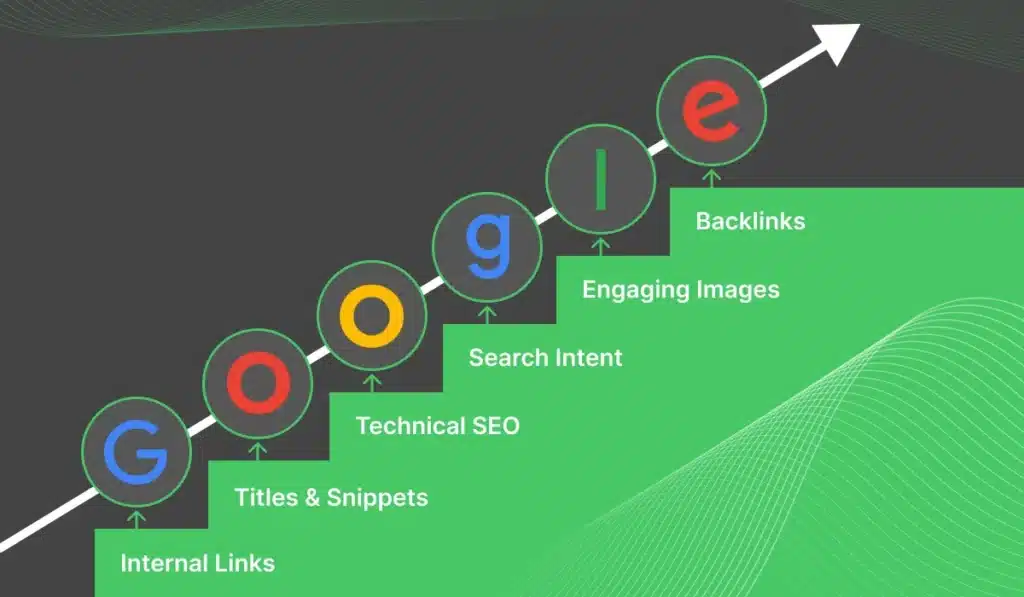
Google’s search algorithm is incredibly complex, constantly evolving to deliver the most relevant and helpful results to users. While no one can perfectly predict its every move, understanding its core principles and implementing effective strategies can significantly boost your website’s visibility in search results. How Long Does It Really Take to Rank on Google’s First Page? Landing your business on the first page of Google search results isn’t something that typically happens quickly. It’s a process that can take 6+ months and requires an in-depth understanding of search engine algorithms. Key Takeaways: SEO is a Long-Term Strategy: Don’t expect overnight results. Focus on building a strong foundation and consistently implementing best practices. Patience is Key: It can take months, or even years, to achieve significant and sustainable improvements in rankings. Continuous Monitoring and Improvement: Regularly track your progress, analyze your results, and make adjustments to your SEO strategy based on data and insights. 9 Actionable Steps to Improve Your Google Rankings 1. Improve Your On-Site SEO On-page SEO is ONE of the FASTEST ways to improve your Google rankings. This checklist provides a foundation for strong on-page SEO, which is crucial for improving your search rankings. 2.Add LSI Keywords to Your Page LSI keywords can be a valuable part of your SEO strategy, they are not a magic bullet. Focus on creating high-quality, user-centric content that provides real value to your audience. By incorporating LSI keywords into your content strategy, you can improve Google’s understanding of your page and enhance your chances of ranking higher in search results.                         One of the quickest ways to uncover valuable LSI keywords is to leverage Google’s own search engine. These suggestions reveal valuable LSI keywords like “Lptop,” “Movie,” “Cast,” and “Online,” which can be naturally incorporated into your content. 3. Monitor Your Technical SEO Technical SEO, often overlooked, forms the bedrock upon which successful search engine optimization rests. It encompasses the intricate technical aspects of your website that directly influence how search engines crawl, index, and ultimately rank your pages. Tools for Technical SEO Monitoring: Google Search Console A valuable resource for monitoring indexing status, crawl errors, and other technical SEO issues. Google Analytics Provides insights into user behaviour, including bounce rates, page load times, and device usage. PageSpeed Insights Analyzes your website’s speed and provides actionable recommendations for improvement. GTmetrix  Another valuable tool for website speed testing and performance optimization. 4. Match Your Content to Search Intent By deeply understanding user search behaviour and aligning your content strategy accordingly, you can significantly improve your website’s visibility in search results, attract highly targeted traffic, and achieve your business goals. Matching Content to User Intent: A Strategic Approach Keyword Research Beyond Volume: Go beyond simply identifying high-volume keywords. Deep dive into user intent behind each keyword. Analyze the SERP: Examine the top-ranking results for your target keyword, such as digital marketing strategy. What type of content is dominating the search results? How are these pages addressing user intent? Look at content format, depth, and relevance to ensure you provide an equally compelling, if not superior, answer. Create Content That Answers User Questions: Directly address the user’s needs and provide the information they are seeking. Optimize On-Page Elements: Title Tags & Meta Descriptions: Accurately reflect user intent and entice clicks. Headings & Subheadings: Structure your content clearly and use headings to guide users. Image Alt Text: Use descriptive alt text that accurately describes the image and includes relevant keywords. Leverage User Behavior: Track User Engagement: Monitor metrics like bounce rate, time on page, and click-through rate to understand how users are interacting with your content. Analyze User Behavior: Use tools like Google Analytics to identify user behavior patterns and refine your content strategy accordingly. 5. Reduce Your Bounce Rate Bounce rate, the percentage of visitors who leave your website after viewing only one page, is a crucial metric for website success. A high bounce rate signals that your website isn’t effectively engaging visitors, potentially leading to lost traffic, lower search engine rankings, and missed opportunities for conversions.    Strategies to Significantly Reduce Bounce Rate: Prioritize Website Speed: Optimize images, minimize HTTP requests, leverage browser caching, and consider a Content Delivery Network (CDN). Enhance User Experience: Clean and Intuitive Design: Prioritize simplicity, clarity, and a user-centered approach. Use white space effectively and employ a logical and intuitive navigation structure. Mobile-First Approach: Ensure your website is fully responsive and provides an optimal experience across all devices. Accessibility Considerations: Adhere to accessibility guidelines (WCAG) to ensure your website is usable by everyone. Create High-Quality, Relevant Content: Focus on User Intent: Thoroughly research user search queries and tailor your content to address their specific needs and questions. Compelling Headlines and Introductions: Capture attention and encourage further exploration. High-Quality Visuals: Use relevant images, videos, and infographics to enhance engagement. Clear and Concise Writing: Break up text with headings, subheadings, bullet points, and short paragraphs. Implement a Robust Internal Linking Strategy: Guide User Flow: Strategically link to relevant internal pages to encourage further exploration and keep users engaged. Improve Website Structure: Internal links help search engines understand the hierarchy and structure of your website. 6. Find Even More Keywords to Target By continuously exploring and expanding your keyword list, you’ll ensure your content stays relevant, attracts the right audience, and helps you achieve your SEO goals. Keyword research is like panning for gold. You need patience, persistence, and the right tools to uncover those valuable nuggets that will make your SEO efforts shine. 7. Enhance Local SEO For Businesses By optimizing your online presence for local searches, you can significantly increase your visibility, attract more foot traffic, and ultimately boost your bottom line, especially if you are offering local SEO services or running a small business. Key Pillars of a Strong Local SEO Strategy: Google My Business (GMB) Optimization: Claim and Verify Your Profile: Ensure your business information is accurate and up-to-date. Complete Your Profile: Fill out all relevant

Top 5 Lead Generation Companies in Florida

Top 5 Lead Generation Companies in Florida

Lead generation services are essential for businesses seeking to attract and convert high-quality leads into customers. By leveraging strategies like SEO, PPC, content marketing, and social media outreach, these services help businesses build a consistent sales pipeline. In Florida, top lead generation companies use data-driven approaches to target the right audience, nurture relationships, and optimize campaigns for higher conversions. Whether through automation, personalized follow-ups, or detailed analytics, these services allow businesses to improve ROI, save time, and scale their growth by attracting and converting leads more effectively. Explore the Top 5 Lead Generation Companies in Florida. These companies are known for their expertise in digital marketing, effective strategies, and innovative approaches to online lead generation. Top 5 Lead Generation Marketing Companies in Florida Mount Web Technologies Core Services: Specializes in providing web development, custom software solutions, digital marketing services, and lead generation services for businesses of all sizes. Expertise: Known for expertise in creating dynamic and responsive websites, eCommerce platforms, and mobile applications that are optimized for online lead generation. Technologies Used: Works with modern technologies such as HTML, CSS, JavaScript, React, Angular, and PHP to build scalable solutions that support digital marketing lead generation strategies. Client Approach: Focuses on delivering user-friendly, scalable solutions that meet the unique business needs of their clients, helping them generate more leads and drive conversions. Service Areas: Offers services in web design, SEO, content management systems (CMS), and lead generation marketing services to help businesses enhance their online presence and customer acquisition. Target Audience: Primarily works with startups, small-to-medium-sized businesses, and organizations looking to build or enhance their online presence with a focus on generating high-quality leads. Location: Based in India, providing global services to clients across diverse industries, including retail, healthcare, education, and technology. Mission: Aims to help clients build a strong online presence through high-quality websites and digital marketing strategies that effectively drive traffic, engagement, and lead generation. Support & Maintenance: Offers ongoing support, maintenance, and optimization services to ensure long-term website performance and lead generation effectiveness. Skyway Media Core Offering: Specializes in digital marketing strategies such as SEO, content marketing, lead generation marketing services, and web design to help businesses attract and convert leads. Business Model: Works closely with businesses to craft custom marketing campaigns tailored to their unique goals, including effective lead generation strategies. Brand Philosophy: Focuses on delivering a transparent, results-driven service with an emphasis on long-term client relationships and ongoing lead generation. Technology Utilized: Leverages cutting-edge marketing tools and analytics to track performance, improve outcomes, and enhance lead generation services. Primary Focus: Aims to assist small to medium-sized businesses in gaining competitive advantages in digital markets by focusing on online lead generation services. Kraus Marketing Brand Focus: A full-service marketing agency with expertise in both traditional and digital marketing, with a strong focus on lead generation. Consultative Approach: Provides a highly personalized strategy that blends creative design, data-driven results, and lead generation services to increase sales. Service Scope: Includes SEO, PPC, branding, web development, social media management, and targeted lead generation marketing services for diverse industries. Client Success: Known for strong case studies in real estate, healthcare, and education sectors, utilizing digital marketing lead generation strategies to drive high-quality leads. Mission Statement: Focuses on helping clients grow by combining strategic planning with creative execution and effective lead generation strategies. SearchX Digital Expertise: A marketing firm highly focused on SEO, SEM, and lead generation marketing services, offering both organic search optimization and paid media strategies. Data-Driven Approach: Relies heavily on advanced analytics and automation to maximize advertising budgets, improve results, and optimize online lead generation services. Niche Specialization: Known for creating bespoke SEO and SEM campaigns tailored to each client’s unique market challenges, with a strong focus on generating high-quality leads. Target Demographic: Works primarily with businesses looking to scale and optimize their lead generation services and digital marketing lead generation strategies. Client Commitment: Provides continuous optimization and performance reporting to ensure client success and consistent lead generation in the competitive online space. World Synergy Service Offerings: Provides integrated marketing, technology solutions, business consulting, and lead generation marketing services to streamline operations and boost lead acquisition. Business Transformation: Specializes in helping companies optimize their business operations with tailored software and marketing solutions, including lead generation services. Client Base: Works with mid-to-large-sized companies, focusing on automating processes, enhancing marketing capabilities, and driving digital marketing lead generation efforts. Key Technologies: Leverages advanced tools such as CRM systems, web development, custom software development, and lead generation marketing services to enhance business growth. Approach to Innovation: Helps businesses digitally transform by bridging the gap between technology, marketing, and operations, with a particular focus on online lead generation services. Why Lead Generation Services Are Important for Your Business Expanding Your Reach With the ever-growing competition in the market, relying solely on traditional marketing methods is no longer enough. Lead generation services help you reach a broader audience, ensuring that your business attracts potential customers in a way that’s scalable and measurable. This results in better-qualified leads and a higher likelihood of conversion. Building a Steady Sales Funnel Effective lead generation creates a steady sales funnel. By continuously attracting and nurturing leads, you ensure that your sales team always has prospects to engage with. This reduces the risk of running dry and helps your business maintain consistent growth. Cost-Effective Growth Compared to traditional forms of advertising, digital marketing strategies like online lead generation services are more cost-effective. By focusing on targeted marketing efforts, businesses can get more value out of their budget, improving ROI over time. Conclusion In today’s competitive business landscape, lead generation services are crucial for attracting high-quality leads and converting them into loyal customers. The top 5 lead generation companies in Florida, including Mount Web Technologies, specialize in data-driven digital marketing strategies that help businesses build a consistent sales pipeline, increase ROI, and reach their target audience effectively. If you’re ready to scale your business and generate more leads, it’s time to take action. Leverage expert digital marketing solutions that drive

Scroll to Top

    Read Case Study in Detail