Google Spam Update September 2026: What Small Businesses Should Check Right Now
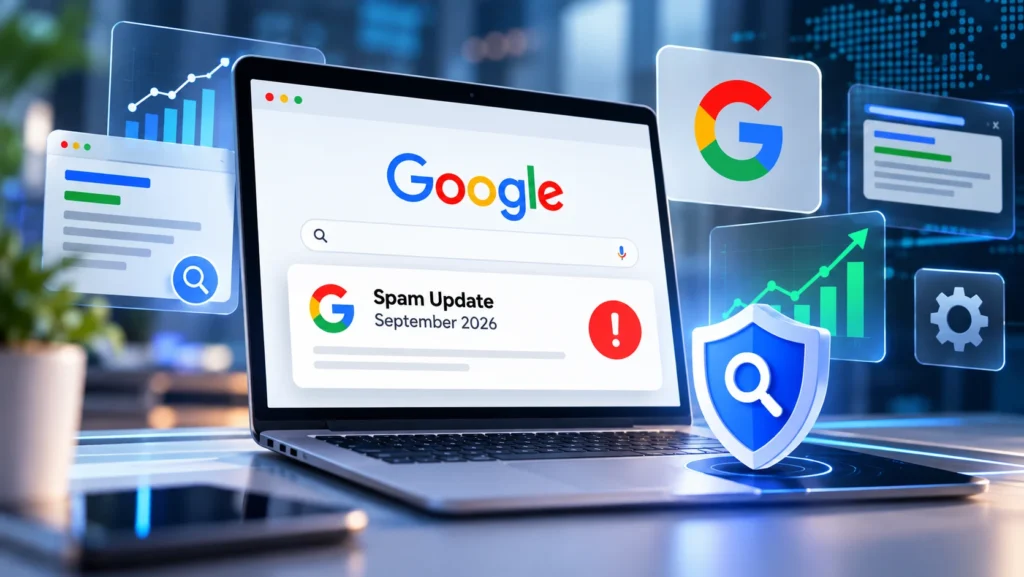
Quick Summary Google released the September 2026 spam update on September 24, 2026, rolling out globally across all languages. This is the fourth Google spam update of 2026, following the March, June, and August updates. The rollout can take up to two weeks, so avoid making panic changes during the window. A website traffic drop after a Google update does not automatically mean a spam penalty. Open Google Search Console and check the Performance report, Coverage, and Manual Actions first. Google spam updates in September 2026 do not affect your site if your content follows Google spam policies and is genuinely useful. The Google Spam Update September 2026 started rolling out on September 24, 2026. This Google algorithm update in September 2026 applies to all websites, in all languages, worldwide. If your organic traffic dropped sometime after that date, this update is the first place to look. It could take up to two weeks to finish rolling out, so not every ranking shift you see right now is the final picture. This is not the first time Google has done this in 2026. The September rollout is the fourth spam update of the year, after similar pushes in March, June, and August. Google uses these updates to strengthen its automated systems and reduce content that tries to game search rankings rather than help real users. Here is what you actually need to check, in plain steps, without the noise. What Is a Google Spam Update and When Did the September 2026 Spam Update Start A Google spam update targets websites that break Google spam policies. These policies cover things like thin or auto-generated content, hidden text, cloaking, link schemes, and pages built to manipulate search rankings rather than serve users. When Google upgrades its detection systems, some sites that ranked well may fall. Meanwhile, sites that were below spammy pages might move up. The September 2026 update officially began on September 24, 2026, at 9:15 AM PDT, according to Google’s Search Status Dashboard. Google confirmed it applies globally across all languages. The rollout window is up to two weeks, meaning effects can continue appearing through early October 2026. Spam Update vs Core Update: What Is the Difference These two are often confused, but they target different problems. A core update re-evaluates how Google scores content quality across its entire index. A spam update specifically improves Google’s automated spam detection and enforcement. Think of a core update as Google changing how it grades papers and a spam update as Google catching people who were cheating. Feature Spam Update Core Update What it targets Spam update targets policy violations. Core update targets overall content quality signals. Who it affects Spam affects sites breaking Google spam policies. Core affects all sites broadly. Recovery path Spam recovery means fixing policy issues. Core recovery means improving overall content. Manual action possible? Spam updates can trigger manual actions. Core updates do not issue manual actions. Why Did My Website Traffic Drop After the Google Spam Update September 2026 If you are seeing a website traffic drop after the Google update, do not assume the worst yet. A drop during the rollout window can come from multiple sources. Your site may have been caught by spam detection. Or a competitor’s spammy site that was outranking you may have been removed, reshuffling rankings. Or it could be completely unrelated, such as a crawl issue, seasonal dip, or Google Discover traffic drop. Before drawing any conclusion, give the rollout at least five to seven days to stabilize, then look at the data. How to Check Google Search Console After a Spam Update Google Search Console is your first stop. Open it and run through these checks in this order. Go to the Performance report and compare impressions and clicks from the week before September 24 against the days after. A sudden drop across many pages at once is a signal. Open the Coverage report. Look for pages newly showing as excluded or with errors. A spike here means Google has problems crawling or indexing your site. Check Manual Actions under Security and Manual Actions. If Google’s reviewers have flagged your site, it will appear here with a specific reason. Look at Search Console performance broken down by page. If only certain pages dropped, note which ones and review their content against Google spam policies. Check Google Discover traffic separately if your site gets Discover traffic. A Discover traffic drop shows up in the Discover tab inside the Performance report. What to Check on Your Website After the Google Spam Update September 2026 Beyond Google Search Console, audit the site itself. Common spam signals often hit small businesses they did not even know they had. Here is what to look at. Low-quality or thin pages that have very little content and provide no real help to a visitor. Duplicate content across multiple pages targeting the same keyword. Backlinks from directories, link farms, or paid link networks that violate Google’s linking policies. AI-generated content published without human review or real value added on top. Your Google Business Profile for accuracy. Incorrect information can hurt local search rankings on top of organic rankings. AI Overviews mentions. If your content is not being cited in AI Overviews, it may lack the depth and credibility Google now expects. How to Recover Website Rankings After Google Spam Update If your site was genuinely hit, the recovery process is not quick, but it is straightforward. First, identify the specific pages that dropped, not just the site overall. Fix or remove thin, low-quality pages. Remove or disavow toxic backlinks only if you have clear evidence of a manual action related to links. Do not use the disavow tool as a panic response without checking Manual Actions first. After fixing issues, allow Google’s automated systems time to re-crawl and reassess your site. Google has said that sites which make genuine improvements can recover when its systems detect that the site now complies with spam policies. This usually