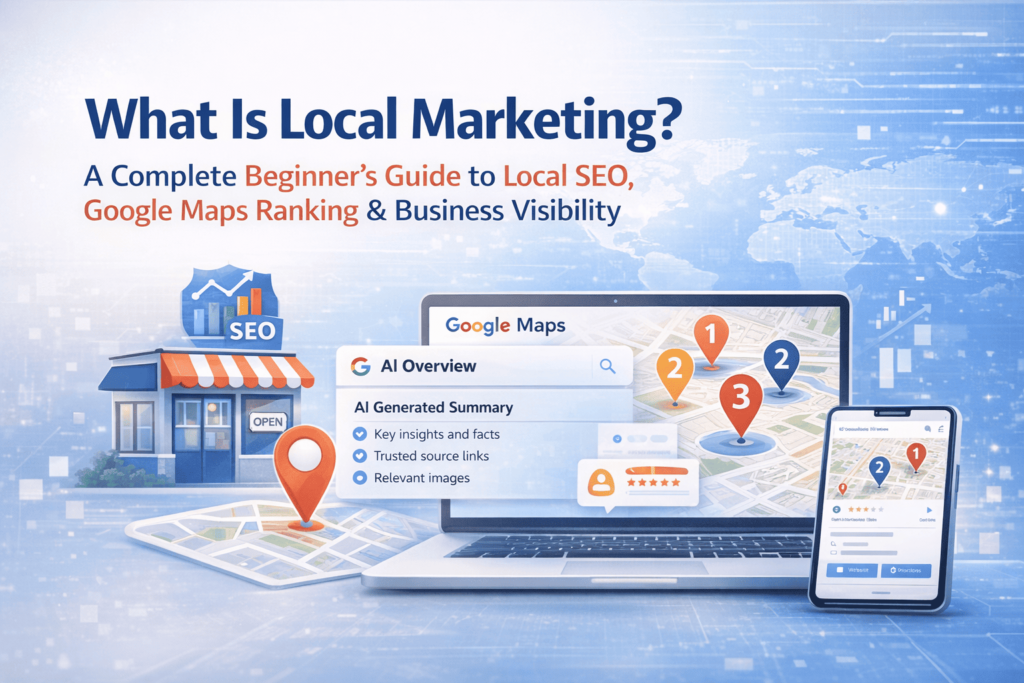
Want to rank higher and faster on Google Maps in 2026? You are not alone. With growing competition, businesses must understand local SEO and the real Google Maps ranking factors that influence visibility. If you are not optimizing strategically, competitors are capturing customers already searching for your services.
Nearly 46% of all Google searches have local intent, and most nearby searches lead to action within 24 hours. That means visibility directly impacts revenue. If you want to improve local search visibility, you need structured optimization, consistent reviews, and strong authority signals across platforms.
Stop guessing and start using a strategy that actually moves the needle. Learning how to improve Google Maps ranking fast requires a mix of technical precision and human connection. This guide provides the exact blueprint you need to lead your local market this year.
What Is Google Maps Ranking and Why It Matters in 2026
Google Maps ranking helps position your business in the “Local 3-Pack.” This is the featured map area that shows up at the top of Google. In 2026, this is the ultimate goal of local search optimization because it captures customers at the exact moment they are ready to spend money.
The numbers tell a clear story of high-intent behavior. Google reports that 46% of all searches now have local intent, and 76% of people who search for something nearby visit a storefront within 24 hours. This shows that the local search algorithm is the primary bridge between a digital query and a physical sale.
Mobile Dominance in Local Discovery has shifted the landscape toward instant gratification. On mobile devices, near me searches containing purchase-focused phrases increased by more than 500% in just two years. If you aren’t ranking on the map, you are missing the most profitable traffic in your industry.
How Google Ranks Businesses in Maps (Algorithm Explained Simply)
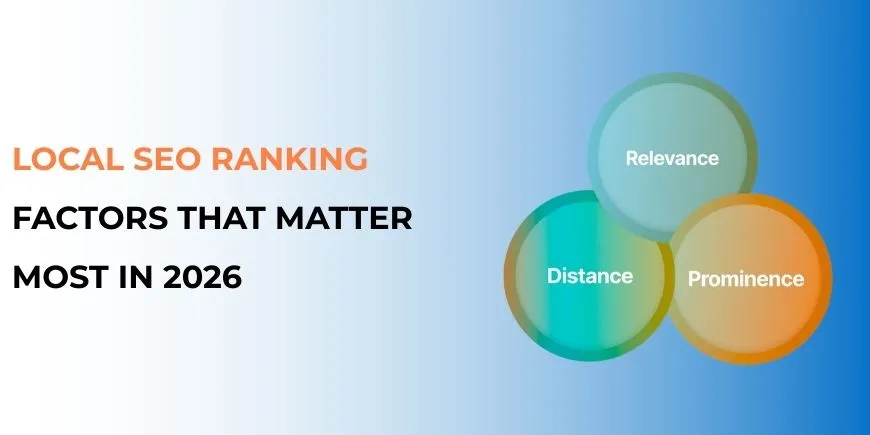
The local search algorithm in 2026 is built on three key pillars. These pillars are now enhanced by advanced machine learning models that focus on verifying entities.
Relevance
Relevance measures how closely your business matches a user’s query. Proper Google Business Profile optimization improves this by aligning your services, categories, and content with real search behavior.
Distance
While proximity has always been a factor, 2026 search is smarter about “Service Areas.” Even if you’re 10 miles away, your local SEO data can help you rank higher. If you serve that specific ZIP code, you can outdo a closer but less relevant competitor.
Prominence
Prominence is your digital authority. It is measured by how well-known your business is offline and online. This is influenced by local pack ranking, the volume of online reviews impacts ranking, and mentions across the local web.
| Factor | What It Means | How to Improve It |
| Relevance | Matching search intent | Update services and categories in GBP |
| Distance | Proximity to searcher | Use AreaServed schema and Geotagged photos |
| Prominence | Authority & reviews | Increase review velocity and local mentions |
The 8 Core Ranking Factors for Google Maps in 2026
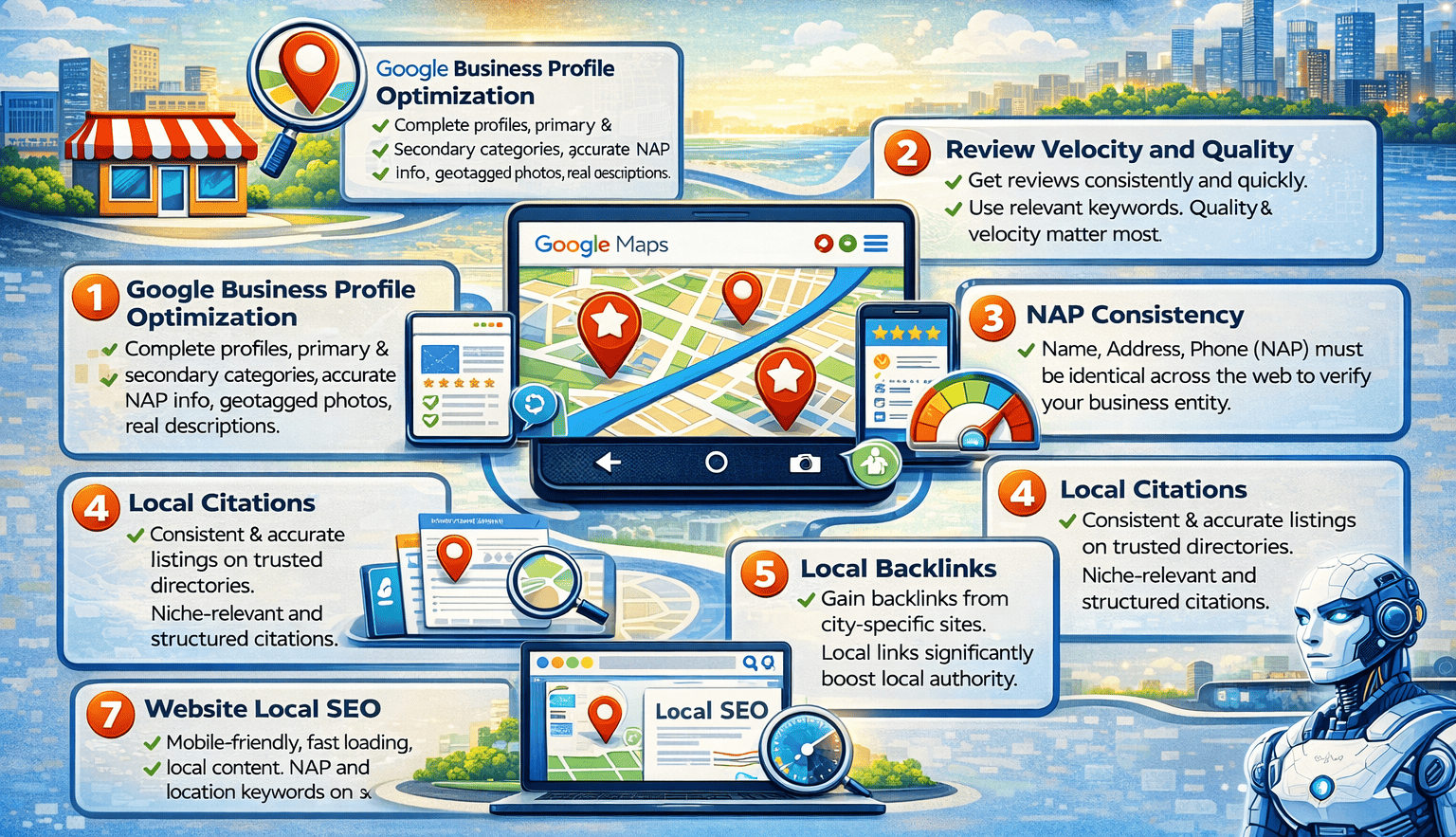
To achieve high Google Maps visibility, you must master these local search ranking factors in 2026:
1. Google Business Profile Optimization
Your profile must be complete and accurate. Add primary and secondary categories carefully. Use real business descriptions that reflect services. Upload geotagged photos regularly. Maintain consistent business hours. Strong profiles improve Google Maps ranking factors alignment and increase relevance signals.
2. Review Velocity and Quality
Total review count matters, but review velocity (how fast you get new reviews) is the tie-breaker in competitive markets. Google’s AI now performs sentiment analysis on review text. If your reviews mention specific services like “best emergency plumbing,” you gain massive relevance points.
3. NAP Consistency
NAP consistency (Name, Address, Phone) is no longer a suggestion; it’s a pass/fail requirement for Entity verification. Inconsistencies across the web fragment your authority and confuse AI search models.
4. Local Citations
High-quality business citations reinforce legitimacy. Focus on trusted directories and niche-relevant platforms. Structured citations improve ranking factors for Google Maps by strengthening prominence.
5. Local Backlinks
A backlink from a local news site or a city-specific blog tells Google you are an authority in that specific geographic area. These are significantly more powerful than generic global links for improving local search visibility.
6. Behavioral Signals (Engagement)
Google tracks how users interact with your listing. High mobile local search behavior signals, such as “Click-to-Call” rates, direction requests, and time spent viewing Geotagged photos, signal to Google that your business is a high-quality destination.
7. Website Local SEO
Your website must support your Map listing. This includes having a mobile-friendly design, fast load speeds, and location-specific landing pages that include your NAP and local keywords.
8. AI Visibility Signals
In 2026, local search ranking tips must include AI-readiness. Use structured data for local SEO (JSON-LD) to define your business type, services, and price ranges. This helps AI Overviews “extract” and recommend your business.
Google AI Overviews and Local Search Evolved in 2026
In 2026, Google AI Overviews have transformed how users discover local businesses. AI now quickly summarizes top recommendations. This means you see trusted and relevant businesses right in the search results, instead of scrolling through many listings. Visibility is no longer just about ranking first. It is about being referenced.
- AI summarizes local recommendations based on authority and relevance
- Structured content increases citation chances in AI results
- Consistent data strengthens entity recognition
- Strong profiles improve the likelihood of ranking in Google AI Overviews
- Positive engagement signals reinforce credibility
- Verified listings build long-term visibility
Reviews and authority now play a larger role than ever. Online reviews affect both traditional search results and AI summary systems because they determine ranking results. The AI systems show higher selection probability for businesses that maintain structured data and consistent citations, and their review count grows.
Step-by-Step Local SEO Framework for 2026
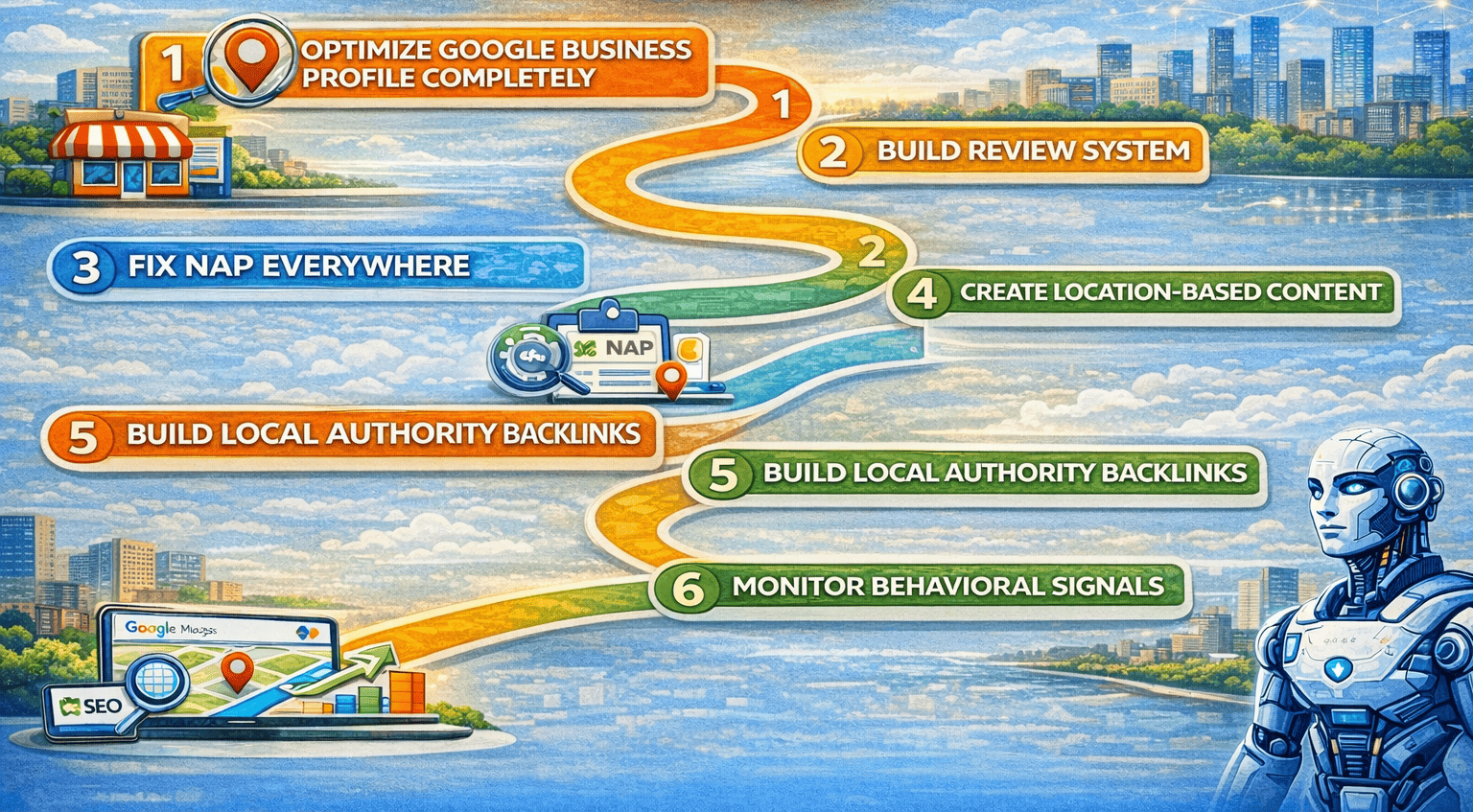
Step 1: Optimize Google Business Profile Completely
Complete every section of your profile so Google trusts your data. Choose accurate categories, add services, and keep hours updated. Upload Geotagged photos monthly to strengthen location signals and improve Google Maps visibility for high-intent searches.
Step 2: Build Review System
Create a simple follow-up process through SMS, WhatsApp, or email after every successful job. Consistent reviews build trust and rankings. This is one of the fastest ways to improve local SEO performance and improve local search visibility without increasing ad spend.
Step 3: Fix NAP Everywhere
Run an audit across directories and fix mismatched business details. Even small differences confuse Google and weaken trust signals. Strong NAP consistency boosts the local algorithm. It increases your listing’s prominence and helps it appear more reliably in Maps results.
Step 4: Create Location-Based Content
Publish service pages and helpful blogs that answer real customer questions, not generic content. Add structured data for local SEO so Google understands services, locations, and credibility. This improves relevance and helps you capture intent-driven local searches faster.
Step 5: Build Local Authority Backlinks
Earn links from local news sites, professional associations, community blogs, and niche directories. These backlinks act like a vote of confidence and strengthen prominence. A greater local authority directly improves Google Maps visibility and supports long-term ranking stability.
Step 6: Monitor Behavioral Signals
Track calls, direction requests, website clicks, and message actions inside your profile insights. Google reads these as real-world proof that people prefer your business. Improve user experience for mobile local search behavior to boost engagement and rankings.
Common Mistakes That Stop Businesses from Ranking
Avoiding these six traps is just as important as your active local SEO efforts. One wrong move can stall your growth and kill your visibility.
Incomplete GBP
Leaving your “Services” or “Products” sections blank is a massive error. If you don’t define exactly what you do, Google cannot match your business to specific customer needs, leaving you invisible in the map pack.
Fake Reviews
Google’s 2026 AI easily detects non-human patterns. Buying reviews or using “review circles” is the fastest way to get your profile suspended permanently. Real, honest feedback is the only way to build lasting trust.
Generic Content
If your website looks like a template and never mentions your specific city or neighborhood, you lose relevance. Use unique project photos, local customer stories, or specific neighborhood landmarks. This shows your business is active in the area, rather than just copying and pasting the same text.
No Local Backlinks
Relying only on big national directories isn’t enough for local SEO. You need links from local news sites or neighborhood blogs to prove you are a prominent figure in your specific geographic area.
Mobile Neglect
Most local searches happen on the move. If your website is slow or hard to navigate on a phone, users will bounce back to the search results, signaling to Google that your business is a poor recommendation.
No Structured Data
Ignoring technical “Schema” markup makes it hard for AI engines to pull your hours or prices. Without this behind-the-scenes data, your business won’t show up correctly in the new AI-driven search summaries.
30-Day Google Maps Ranking Action Plan (Step-by-Step Guide)
Here is the four-week breakdown for your 30-day Google Maps ranking action plan. This structure is designed to be actionable for business owners while checking every box for the local search algorithm.
Week 1: Foundation and profile authority
The first seven days are about Google Business Profile optimization and verifying your entity. Start by auditing your NAP consistency to ensure your name, address, and phone number are identical across the web. During this week, you should upload at least 15 geotagged photos and fully build out your services section with clear, descriptive text.
Week 2: Review velocity and trust building
During the second week, focus on online reviews’ impact on ranking by launching an automated request system. Success in 2026 relies on how quickly you review. So, try to do two to three detailed reviews each week, not just a big burst at once. Always respond to new reviews within 24 hours to signal to Google that your business is active and engaged.
Week 3: Localized content and technical SEO
This week is dedicated to improving local search visibility through your website and “local posts” on your profile. Create a landing page for your location. Include structured data for local SEO. This helps AI engines understand your service area better. Update your Google profile weekly. Mention a local neighborhood or landmark. This helps boost your geographic relevance.
Week 4: Engagement signals and AI readiness
In the final week, optimize for mobile local search behavior by testing your website’s click-to-call buttons and load speed. Fill your profile’s “questions and answers” section with useful, keyword-rich details. This will boost your chances of showing up in AI search results. Check your performance insights to find out which photos and posts got the most “direction requests.” Focus more on that content.
Conclusion
Long-term profitability today depends heavily on local SEO and the real impact your services create for customers. Ranking number one is not a shortcut or a one-day trick. It needs a well-optimized profile, steady citations, good reviews, local authority links, and targeted on-page improvements. Nearly half of all Google searches carry local intent, and many of those users are ready to visit or buy. Businesses that earn trust and deliver real value become the preferred local choice.
Ready to move toward local search dominance and rank higher on Google Maps? Connect with Mount Web Technologies and consult directly with a C-Level strategist for your e-commerce or local business. No junior account managers. No generic advice. Get a 20-year veteran perspective on scaling revenue and leading your market with confidence.
Frequently Asked Questions
How can I improve my business rank on Google Maps and local search?
Start by fully optimizing your Google Business Profile with accurate categories, updated services, and fresh photos. Maintain review consistency, strengthen NAP consistency, and build relevant backlinks. Understanding how Google Maps ranking works helps you focus on relevance, distance, and prominence instead of random tactics.
How to improve local business ranking on map platforms?
Map platforms rely on consistent business information, reviews, and authority signals. Focus on review velocity, structured data, and engagement metrics like calls and direction requests. Strong Google Maps citations for GMB ranking and local seo also improve trust signals across search engines.
Which tools help boost local search rankings effectively?
Use tools for citation audits, review management, and performance tracking. A proper Google Maps ranking check tool helps monitor visibility trends and competitor positioning. Analytics platforms also help track user behavior to refine your local SEO strategy effectively.
Top services for managing Google Maps listings in India?
Professional agencies that focus on profile optimization, review management, citation building, and local link acquisition can boost rankings. Look for providers experienced in Google Maps citations for GMB ranking and strategic SEO execution rather than basic listing submissions.
How can I improve my local business ranking on Google Maps?
Improve listing accuracy, publish relevant content, maintain consistent reviews, and build authority through local backlinks. Google rewards businesses that demonstrate reliability and engagement across platforms. Continuous optimization performs better than one-time setup changes.
How to improve local business visibility on map applications?
Update your profile regularly, respond to reviews, and upload geotagged images. Strengthen location relevance and track engagement metrics. Visibility improves when your profile attracts consistent interaction and maintains trust signals across directories.
Which services can help boost Google Maps rankings for small businesses?
Look for services offering citation cleanup, structured data implementation, review strategy setup, backlink outreach, and profile optimization. Businesses that combine technical fixes with engagement growth achieve stronger map performance.
Best strategies for increasing visibility on local map searches in India?
Build high-quality citations, ensure listing consistency, maintain steady reviews, and optimize for mobile search behavior. Monitor performance regularly and refine strategy based on data insights rather than assumptions.
Where to find professionals offering Google Maps SEO services nearby?
Search for experienced agencies with proven results in local ranking growth. Verify case studies, client reviews, and transparent processes. A strong provider understands both technical optimization and long-term authority building for sustainable rankings.