How to rank on google

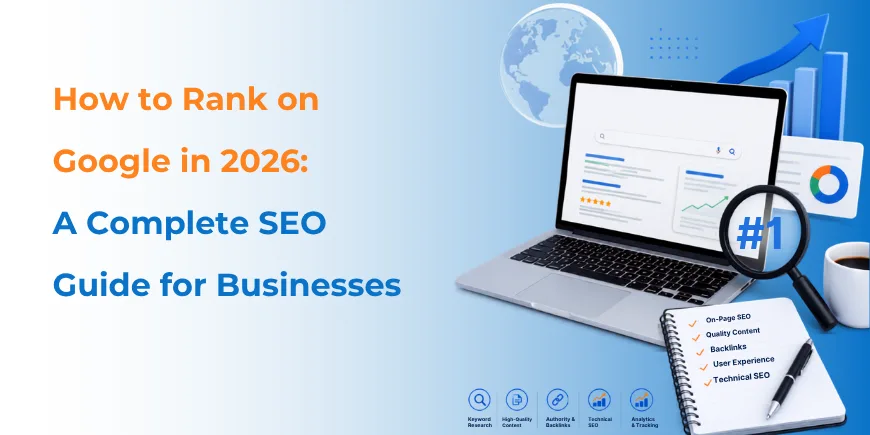
How to Rank on Google in 2026: A Complete SEO Guide for Businesses

Most businesses chase Google rankings the wrong way. They stuff keywords, buy cheap backlinks, and wonder why their traffic never moves. Here is the truth: how to rank on Google in 2026 is not about tricks. It is about understanding exactly what Google rewards and then building your entire content and technical strategy around those signals. This guide breaks it all down without the jargon. According to Google’s own data, the top three organic results capture over 54% of all clicks on a search results page. If you are not in that zone, you are invisible to more than half your potential customers. Let us change that. What Google Actually Rewards in 2026 The rules of search have shifted. If you are still optimising for 2021, you are already behind. The Google ranking factors in the 2026 edition have three non-negotiables at its core: expertise, relevance, and page experience. Understanding these Google ranking factors is the first step towards building a strategy that holds up after every algorithm update. E-E-A-T: The Foundation of Every First Page Result E-E-A-T signals for Google 2026 stand for Experience, Expertise, Authoritativeness, and Trustworthiness. Google’s quality raters use E-E-A-T as a lens to assess whether a page deserves to rank. The critical update in 2026 is that Google now measures E-E-A-T at the site level, not just at the page level. One strong article cannot save a weak site. To build strong E-E-A-T signals for Google in 2026, focus on: Author bios that show real credentials and link to author profiles Citing sources and studies within your content Earning mentions from trusted publications in your industry Keeping all factual information updated and accurate Building a clear “About” page that establishes who you are and why you should be trusted This is not optional. Pages lacking clear authorship and trust signals are being filtered from competitive queries. The AI Revolution in Search This is where everything changes. SEO trends in 2026 are dominated by one reality: AI is writing the rules now. Google’s Search Generative Experience (SGE) has fundamentally altered how results appear. When someone searches for how to rank on Google fast, they often get an AI-generated overview before they see traditional results. You need to optimize for BOTH. AI Overview: Keywords like “how to rank on Google fast” trigger these AI summaries. To appear in them: Structure your content with clear, definitive answers Use schema markup extensively (we’ll cover this shortly) Write in a conversational, question-and-answer format Include comparison tables and bulleted lists Front-load your most valuable information in the first 100 words To succeed in this AI-driven search era, businesses must prioritize clarity, structure, and intent-focused content. You must also optimize for both traditional rankings and AI-generated search experiences simultaneously. Technical SEO Checklist for 2026 A great article on a broken website will never rank. Your technical SEO checklist for 2026 should include: Technical Factor Why It Matters Core Web Vitals LCP, CLS, and INP scores directly affect ranking eligibility Mobile-first indexing Google indexes your mobile version first, always HTTPS Non-secure sites face trust penalties Structured data (Schema markup) Enables rich results and AI Overview inclusion Crawlability Broken internal links and blocked pages waste crawl budget Page speed A 1-second delay in page load time reduces conversions by 7%, according to Ahrefs Run a technical audit at least once per quarter. Tools like Screaming Frog, Google Search Console, and Semrush will reveal issues that quietly cost you rankings. Pro Tip: Schema markup is one of the easiest ways to get into Google’s AI Overviews. Start by creating FAQ schema using Google’s Structured Data Markup Helper. Add the code to your page, then test it with the Rich Results tool. Keep your questions and answers clear and well-structured. Pages using schema often get 20–30% higher click-through rates. The Best SEO Strategy for 2026: What Actually Moves Rankings Understanding SEO is not enough anymore. What really matters is execution. The best SEO strategy for 2026 is not about hacks or shortcuts. It is about clarity, consistency, and delivering real value. 1. High-Value Content  Don’t just write; solve problems. Google rewards content that users actually read and share.  Here is the framework that separates first-page content from everything else: Match Intent: If they want a tool, don’t give them a 2,000-word essay. Beat the Top 10: Add original data or expert insights that your competitors lack. Stay Fresh: Update old posts constantly. Stale data equals falling rankings. 2. Question-Based Keywords Are Powerful Question-based keywords match real user intent. They boost your content’s visibility, especially in featured snippets and AI-driven search results. Focus on real user questions, not just keywords Use “how,” “what,” and “why” queries Improve chances of featured snippets Capture high-intent traffic Align content with search behavior When you optimize for what your audience wants, you boost your visibility. This approach leads to more clicks and improves your ranking in the current search results. 3. Explore “People Also Ask” and Related Searches The “People Also Ask” and “Related Searches” sections show real user questions. This helps you match your content with SEO ranking factors and actual search trends. These insights help structure content naturally, strengthen E-E-A-T signals for Google 2026, and improve your chances of appearing in AI Overviews and featured results. Use PAA questions as H3 subheadings Answer queries clearly and directly Expand content depth with related searches Match real user intent, not assumptions Improve visibility in AI-driven results 4. Image and Multimedia Optimization Matters Images and multimedia boost engagement. They increase dwell time, scroll depth, and interaction signals. This helps your content perform better than plain text pages in today’s search results. Keep users on the page with multimedia that makes complex ideas simple.  Compress images for faster loading Use descriptive alt text with keywords Add captions for better clarity Include infographics for explanations Use short videos to boost engagement your content is connected. This proves you own the entire topic. 5. Use Schema Markup for Visibility (AI Overviews Shortcut) Google does
ChatGPT SEO

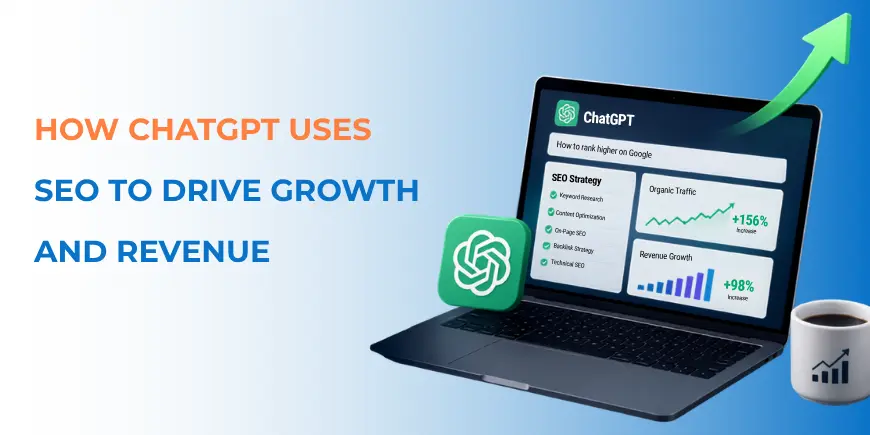
How ChatGPT uses SEO to drive growth and revenue

ChatGPT is the 5th most-visited website in the world. It has never run a single paid ad. Here is exactly how it happened and what you can learn from it. In September 2025, Sam Altman announced that ChatGPT had crossed 800 million weekly active users & nearly 10% of the world’s adult population. The site now receives 5 billion visits every single month and ranks as the 5th most visited website globally.   No Super Bowl ad. No billboard. No Google Ads campaign. Just product, content, and code working together in a loop that most companies have not built yet. That loop is what we now call ChatGPT SEO – a system where visibility, user intent, and content scale compound without paid acquisition. This blog breaks down exactly how that loop works. We’ll use a simple framework called the 3Cs – Code, Content, and Conversions – to show you what OpenAI built, why it works, and what you can steal from it starting today. No jargon. No fluff. Just the actual mechanics. First, Let’s Clear the Confusion: Is ChatGPT Killing SEO or Using It? Before we talk about what ChatGPT is doing with SEO, we need to address the headline that’s been circulating for two years: “SEO is dead because of AI.” It isn’t. But the fear is real, and it deserves a real answer. The “SEO is dead” claim is based on real fear, not real data Some marketers said traffic dropped by 40–50% in 2025. They declared SEO was over. But these claims come from small, biased samples, not reliable data. When you look at large scale analysis, the picture changes completely and supports a clearer reality: ChatGPT didn’t kill search traffic. Analysis of 40,000+ major US websites showed organic SEO traffic dropped by only 2.5%, not 40% Google’s own traffic increased by 0.8% in 2025 Visitor growth rose by 1.4% in Q4 2025 compared to Q4 2024 SEO is not disappearing, it is evolving. Some industries like news, health, cooking, and entertainment saw sharper declines, while categories like shopping, clothing, and marketplaces actually grew. This shift matches how AI platforms work. Visibility, intent, and user behavior feed systems like the OpenAI revenue model. So, search isn’t dying; it’s just being reshaped. What actually caused the traffic drop and it’s not ChatGPT Most people are blaming ChatGPT for the drop in clicks, but that is not what the data shows. The real shift started when Google rolled out AI Overviews in March 2025. Impressions and rankings stayed stable, which proves clicks were being captured earlier, not lost due to ChatGPT SEO. CTR dropped from 15% to 8% when AI Overviews appeared, with total click volume falling by up to 58%. This clearly shows Google added a zero click layer above organic results. The change comes from product design, not any flaw in ChatGPT growth strategy or SEO itself. What is ChatGPT actually doing to search? ChatGPT has absorbed the top of funnel queries, the quick definitions, how-to searches, and basic comparisons people used to make on Google. It replaces the first one or two searches in a user’s journey, not the entire journey. This shift is why understanding how ChatGPT drives organic traffic matters more than ever. Here is how it actually works. A user asks ChatGPT, “What CRM should I use?” and gets a comparison instantly. Then they move to Google and search “Salesforce vs HubSpot pricing.” That second search is high intent and still lands on organic results. ChatGPT didn’t kill search traffic. It changed where users enter the funnel. Brands that rely solely on generic top content are losing visibility. In contrast, those investing in AI content for SEO and high-intent pages are gaining an advantage. How ChatGPT Became One of the Biggest SEO Winners Without Ads The same tool people say is killing SEO runs one of the most aggressive organic search strategies on the internet. The numbers most people haven’t seen: Comparative SEO Performance: ChatGPT vs. Competitors  Metric ChatGPT (OpenAI) Perplexity AI Claude (Anthropic) Total Monthly Visits 5.2 Billion 206 Million 219 Million Organic Search Traffic 76.5 Million 1.7 Million 908,000 Google Branded Searches 45.5 Million 1 Million 500,000 Keywords Ranked 287,800 184,800 36,000 Direct Traffic Share 80.29% ~70% ~65% Annual SEO Talent Spend $600,000 Not Publicly Disclosed Not Publicly Disclosed The numbers clearly show this is not accidental growth. It is a calculated ChatGPT growth strategy where brand demand, organic reach, and product experience work together to dominate search without relying on paid ads or traditional marketing channels. The 3Cs Growth Engine: Code, Content, and Conversions C1 (Code): The Technical Setup That Commands Google’s Respect Most people think technical SEO is a developer thing. It is not. It simply means making your site easy for Google to read, and OpenAI does this better than almost anyone. This is a core part of ChatGPT SEO. Two things worth copying from ChatGPT’s setup robots.txt done right: Most sites leave this file on default. OpenAI does not. Their setup includes multiple sitemaps, explicit crawler rules, and a clear separation. These are between three crawlers: GPTBot for training, OAI SearchBot for real-time answers, and ChatGPT User for live browsing. This is intentional infrastructure, not an afterthought. Clean, keyword-rich URLs: URLs with real words get 45% higher CTR compared to random strings. Across 287K pages, that becomes a compounding ranking signal. The thing most site owners are missing right now If you have a blanket ‘Disallow: /’ in your robots.txt, you’re invisible in ChatGPT answers, Google AI Overviews, and Perplexity. Your competitors fill that space instead. Understanding the OpenAI revenue model makes this clearer: GPTBot feeds training data, while OAI-SearchBot and ChatGPT-User power the paid product – ChatGPT’s real-time answers. Blocking the retrieval crawlers cuts you out of the product people are actually paying to use. # Standard search engines — always allow User-agent: Googlebot Allow: / User-agent: Bingbot Allow: / # AI retrieval crawlers — ALLOW these so you appear in AI answers User-agent: ChatGPT-User Allow: /

Google Discover Traffic

How To Increase Google Discover Traffic With Technical Fixes

You’re publishing consistently. Your content is decent. But Google Discover traffic keeps skipping you – no impressions, no clicks, no traffic spike. That’s not a content quality problem. That’s a signal problem. Google Discover doesn’t work like Search. It doesn’t wait for someone to type a query. It decides, based on technical signals, trust signals, and interest matching, whether your content deserves to land in front of thousands of readers automatically. This post breaks down exactly what’s broken and how to fix it. So, let’s start without getting delayed!  Why Google Discover Is Now More Important Than Search for Publishers Search is changing fast. Social reach is collapsing – organic reach on Facebook and Instagram has dropped below 2% for most publishers. AI-powered search from Google, ChatGPT, and Gemini is now answering questions directly, which means fewer clicks reach your site even when you rank. Google Discover is different. It’s the last major passive traffic channel that sends high-intent readers directly to your content without them searching for it. It runs on the Google app, Chrome mobile, and Google.com on mobile, reaching over 800 million users. If you’re a publisher and you’re not optimizing for Google Discover traffic, you’re leaving your biggest untapped audience channel completely closed. Essential Considerations Before You Start Optimizing for Google Discover Traffic Most publishers jump straight into technical fixes and wonder why nothing changes. Before any optimization works, Google Discover traffic needs three foundational signals in place. Miss any one of them and the rest of your fixes won’t move the needle. 1. Your Content Must Be Timely & Interest-Driven To drive Google Discover traffic, your content must align with current trends and real time user interest. Focus on fresh topics and what your audience is actively searching or engaging with right now. 2. Your Site Needs a Clear Topical Identity A strong niche focus is key to effective Google Discover optimization. Consistently publishing within specific topics helps Google understand your authority and improves your chances of being recommended in Discover feeds.  3. Your Page Must Be Indexable and Mobile-Ready Following Google Discover best practices, ensure your pages are properly indexed, mobile friendly, and fast loading. Technical issues can block eligibility, no matter how strong your content is.  How to Optimize for Google Discover To increase Discover visibility and discover how to get Google Discover traffic, publish timely, mobile-optimized content with striking visuals. Additionally, you can learn how to get cited in Google AI Overviews by structuring your text with direct answers, bulleted lists, and strong topical authority that algorithms trust. Publisher Profile: Google Needs to Know Who You Are New sites and low-authority domains face challenges with Google Discover. This isn’t due to poor content. Rather, Google hasn’t established a clear publisher profile for them yet. This directly affects your ability to drive Google Discover traffic. Google Discover uses a domain-level identity model. It looks at your publishing history, topic consistency, and on-site signals to decide if your site is a trustworthy content source worth recommending to users. How to accelerate your publisher profile: Publish consistently in one or two topic clusters, not random topics Build a detailed About page that clearly explains who runs the site and why Use visible bylines on every post, not “Staff Writer” but a real named author Get your site listed on Google News if you publish news-adjacent content Link your social profiles from your About page to give Google more identity signals The faster Google recognizes our site as a legitimate publisher in your niche, the faster you start to increase Google Discover impressions. Author Transparency and E-E-A-T Signals That Discover Trusts Google’s E-E-A-T framework (Experience, Expertise, Authoritativeness, Trustworthiness) directly impacts Google Discover eligibility. Content from anonymous sources or sites with no clear author identity consistently underperforms in Discover. Author transparency fixes: Every post needs a named author with a linked author bio page The bio page should list credentials, experience, and links to their social profiles or LinkedIn Add Author schema markup with sameAs links pointing to authoritative profiles (LinkedIn, Twitter, Wikipedia if applicable) Write content that shows first-hand experience — personal examples, real data, original screenshots Add a “Last reviewed by [Author Name]” line to evergreen content E-E-A-T is not just a content signal, it is a technical implementation. If your author schema is missing or your author pages are thin, fix them before worrying about anything else to improve your Google Discover traffic. Organization Schema and Site Trustworthiness Google Discover SEO evaluates your entire site, not just the article. If your domain sends weak trust signals, individual articles won’t get distributed regardless of their quality. The organization schema tells Google who legally operates the site. Add it to your homepage, and it should include the following: @type: Organization name, url, logo sameAs links to your verified social profiles contact point with a real email or contact method Beyond schema, these site trustworthiness signals matter: Active SSL certificate (HTTPS, not HTTP) A real Privacy Policy and Terms of Service page A working Contact page No broken links or crawl errors in Google Search Console Clean ad placement pages with aggressive ad layouts are suppressed in Discover Trust is a domain-level score. Build it once, and it compounds over every piece of content you publish. Core Web Vitals: The Technical Gate You Must Pass Core Web Vitals are a confirmed ranking factor for Google Discover traffic. Google uses real world field data from Chrome users, not just lab scores, to evaluate your pages. The three metrics that matter: Metric What It Measures Good Threshold LCP (Largest Contentful Paint) How fast main content loads Under 2.5 seconds INP (Interaction to Next Paint) How fast page responds to clicks Under 200ms CLS (Cumulative Layout Shift) How much the page jumps while loading Under 0.1 How to Track & Grow Google Discover Traffic in Search Console You can’t fix what you can’t measure. Google Search Console has a dedicated Discover report and most publishers either don’t check it

AI search optimization

What AI Sees When It Visits Your Website (And How To Fix It)

Your client’s clinic ranks well on Google. Traffic looks fine. But when their next patient opens ChatGPT or Gemini and asks for a recommendation, a competitor comes up, not your client. This is the AI search optimization problem that most marketing managers did not know they had until 2025. AI platforms do not use your Google rankings. They send their own bots to read your website directly. If those bots hit a wall, a blocked door, a blank page or content hidden inside JavaScript they move on. They find your competitor instead. In this guide, today we tell you exactly what is happening and how to fix it. The 2026 Reality: AI Search Is Not Optional Growing Adoption: Over 50% of U.S. adults now use generative AI tools like ChatGPT and Gemini for research and information gathering. (Source: Pew Research Center) The Rise of Zero-Click: Nearly 60% of Google searches now end without a click, as AI-generated summaries provide the answer directly on the results page. (Source: SparkToro / Datos) Explosive Traffic Shift: Referral traffic from AI platforms to brand websites has grown by over 1,000% in the last year alone. (Source: Adobe Digital Insights) These numbers point to one clear truth in 2026. If AI cannot read your website, you do not exist in AI search. This is not a future problem. It is happening right now for every brand that has not checked how AI bots access its content. SEO vs GEO vs AEO: The 2026 Framework Explained The digital marketing world is running three different games at the same time. Understanding the difference is the first step to winning all three. Factor Traditional SEO AI Search Optimization (GEO / AEO) Goal Rank on Google results page Get cited inside AI generated answers Primary Bot Googlebot (indexer) GPTBot, ClaudeBot, PerplexityBot (retrieval) Content Signal Backlinks and keyword density Structured data, semantic clarity and authority Rendering Need Can handle JavaScript slowly Needs pre-rendered server side HTML robots.txt Impact Block bad bots Block the wrong AI bots and become invisible Success Metric SERP position and organic traffic Brand citation rate in AI answers Schema Markup Nice to have Critical for AI to understand content type 2026 Fact: Google’s own AI Mode now shows AI generated answers for 99.9% of informational queries. If your content is not structured for AI consumption, it will not appear in these answers, even if you rank number one on traditional Google.  Answer Engine Optimization (AEO) is the broad strategy of making your content suitable for direct answers. Generative Engine Optimization (GEO) is its 2024 to 2026 evolution: optimizing specifically for AI based answer generation. AIO optimization refers to the technical side of things, making sure your site structure, server response and schema markup are ready for AI crawlers. How AI Actually Reads Your Website This is the section most digital marketing guides skip. Understanding the mechanics changes everything else. Step 1: The Bot Knocks on Your Door An AI retrieval bot such as GPTBot (OpenAI), ClaudeBot (Anthropic) or PerplexityBot sends a request to your server and identifies itself. This is where the first problem often appears. If your server or content delivery network rejects that request, the bot gets nothing at all and your brand becomes invisible to that AI platform. Step 2: It Reads Only the Raw HTML This is where AI bots work very differently from Google. Google can process JavaScript over time, but AI bots like GPTBot cannot. They only read the raw HTML your server sends. So if your website is built using React, Angular, or Vue as a Single Page Application, there is a good chance the server is sending almost empty content to AI bots. That means the bot does not actually see your real content, it just sees a blank or incomplete page and moves on. Step 3: It Checks Your robots.txt Before they even read your website, AI bots first check your robots.txt file. A very common mistake happens when websites use Cloudflare’s “Block AI Scrapers” feature. It often ends up blocking all AI bots, including the ones used by ChatGPT and Gemini. The result is simple and immediate. Your brand disappears from AI search because these platforms cannot access your website at all. Step 4: It Reads Your Content Structure If the bot can access your content, it reads from top to bottom, paying close attention to key elements that directly impact AI search optimization: H1 and H2 headings that help AI understand your main topic and subtopics The first 150 to 200 words of each page, which AI often uses to build summaries Schema markup in JSON format that explains what type of content your page contains Alt text on images, since AI cannot see visuals and depends on descriptions Internal link anchor text that helps AI understand how your pages connect to each other The GEO Technical Checklist: How to Make Your Website AI Friendly 1. Server side rendered HTML AI bots read only raw HTML from your server. Understanding how AI reads websites is critical because JavaScript-heavy pages often appear empty to them. 2. robots.txt allows GPTBot and ClaudeBot Before crawling, AI Crawlers / Bots check your robots.txt file. If blocked, your website becomes invisible across platforms like ChatGPT and Gemini instantly. 3. Schema markup (FAQ, Article, LocalBusiness) Schema markup helps AI understand your content type clearly. It improves visibility in AI Search by making your data structured and easy to interpret. 4. Structured H1 to H3 heading hierarchy Clear heading structure helps AI scan and extract answers. It plays a key role when running an AI Search Gap Analysis to identify why competitors are being picked over you. 5. Clear author and date metadata AI systems prioritise trustworthy content. Showing author names and recent updates signals credibility and improves your chances of being selected in AI responses. 6. Descriptive alt text on all images AI cannot see images, only read text. Adding descriptive alt text ensures your visuals contribute meaningfully to content

SEO Maintenance

SEO Maintenance: Everything You Need to Know for Consistent Rankings

Most businesses invest heavily in SEO at the start, researching keywords, building links, and optimising pages. Rankings improve, traffic grows, and everything looks promising. Then performance slowly declines. This happens when SEO is treated as a one-time effort instead of ongoing SEO maintenance. The reality is simple. Search keeps changing. Google updates frequently, competitors keep improving, and user intent shifts constantly. Understanding the importance of SEO maintenance for businesses is what separates brands that sustain rankings from those that gradually lose visibility, traffic, and leads over time. This guide covers what SEO maintenance is, what it includes, and why it’s crucial in 2026. It also explains how to do it so that Google, AI search tools, and real people respond positively.  What Is SEO Maintenance and Why Does It Matter in 2026? SEO maintenance is the ongoing process of monitoring, updating, and improving your website so it keeps ranking in search engine results over time. Without regular maintenance, your search engine rankings start to decay. Google changes how it evaluates websites. Competitors publish stronger content. Your pages become outdated. Technical issues cause slow load times and a poor experience for visitors. All of this costs you rankings and organic traffic. Here are the five biggest reasons you cannot afford to ignore maintenance in 2026. Google Updates Its Algorithm Constantly Google makes thousands of algorithm changes every year. Some are small. Some are major core updates that can shift rankings dramatically overnight. If you are not actively monitoring your website, you will not even know when a drop happens until it is too late to recover quickly. In 2026, Google has also expanded its AI Overviews to over 200 countries and 40 languages. This changes how results appear on the page. Sites that are well-maintained and structured clearly are far more likely to be cited inside these AI-generated answers. Competitors Are Optimizing Continuously Your competitors are not sitting still. They are publishing new content, building backlinks, and improving their pages every single month. If you stop, they will overtake you. Rankings are not permanent. They go to whoever is doing the most consistent work. Search Intent Changes Over Time The way people search shifts constantly. What worked two years ago may not match what people are actually typing into Google today. Voice search, conversational queries, and AI-assisted searches have all changed the nature of search intent. Your content needs to be updated to reflect how people are actually looking for information right now. Content Gets Outdated and Loses Trust A blog post written in 2022 with statistics from 2021 does not inspire confidence. Google can detect when content is old and has stopped earning links or engagement. Users also notice. They are less likely to trust or share content that feels stale. Technical Issues Build Up Silently Broken links, slow pages, mobile rendering problems, duplicate content, and missing schema markup all accumulate over time. None of these scream for attention the way a crashed website would. But they quietly hurt your rankings and your user experience every single day. What Does SEO Maintenance Actually Include? If you are wondering how often you should update your website for SEO, the answer depends on how well you manage ongoing SEO maintenance. It is not about timing alone. It is about consistency. SEO maintenance covers five core areas, and skipping even one of them will cost you over time.  1. Performance Monitoring You cannot fix what you do not measure. Every month, you should track: Keyword rankings for your most important pages Organic traffic from Google Search Console and Analytics Click through rate from search results Bounce rate and time on page Impressions versus actual clicks Tracking keyword rankings and overall organic traffic growth helps you understand what is improving and what is declining. A drop in CTR usually means your title or meta needs improvement. A sudden drop in rankings may indicate a competitor improvement or a Google algorithm update impacting your site. 2. Technical SEO Audits Technical issues are silent but powerful. A proper monthly audit should include: Broken links and 404 errors Page speed and Core Web Vitals Mobile usability Crawl errors in Search Console Duplicate content issues Schema and structured data accuracy In 2026, Core Web Vitals are still a ranking factor. Many websites still fail these benchmarks, which creates an easy opportunity to gain an advantage. Ensuring your structured data is correctly implemented also helps search engines and AI systems understand your content better. 3. Content Updates and Refreshes Content does not stay relevant forever. Regular updates should include: Updating outdated statistics and examples Adding new sections based on user queries Improving readability and structure Targeting new long-tail keywords Updating internal links Using long-tail keywords helps you match real user intent, especially in AI driven search. Well maintained content performs better over time. Studies show that content updated regularly continues to grow in traffic even after the first year, making it a long term asset. 4. Local SEO Maintenance For location based businesses, this is critical. It includes: Keeping your Google Business Profile updated with correct details Adding photos, posts, and services Responding to reviews consistently Maintaining NAP consistency across all platforms Optimizing for local and near me searches Strong local SEO depends heavily on your Google Business Profile and accurate NAP consistency. Businesses that actively manage their profile outperform those that ignore it after setup. 5. Off Page SEO and Backlink Management Backlinks still play a major role in rankings. Ongoing maintenance includes: Removing toxic backlinks Building high quality links Tracking brand mentions Analyzing competitor backlinks A clean and strong backlink profile helps maintain authority and protects your site from ranking drops over time. How AI Search Changes Everything About SEO Maintenance in 2026 If you are thinking about how Google AI Overview affects your website traffic in 2026, let’s understand what is actually happening behind the scenes. What Are Google AI Overviews? Google AI Overviews are the summaries that appear at the top of search results

How to see AI Seach prompts in Google search console & AI queries

How To See AI Search Prompts Inside Google Search Console

Quick Summary AI search prompts Google Search Console reveal how users ask real questions, helping you move from keyword targeting to true intent-driven content strategies. Google Search Console AI queries show high-intent, long-tail searches that indicate what users actually want before making a decision. Understanding how to track AI searches in GSC helps you identify impressions with low CTR where AI is using your content without clicks. Google AI Mode search data highlights zero-click behavior, making impressions a critical signal for visibility and demand. Use AI search trends and AI-generated search data to identify gaps, improve content, and stay ahead of shifting user behavior. Master how to analyze long-tail queries and how to extract insights from Search Console to continuously update content and build compounding SEO growth. 📞 Book Free Consultation Your customers are no longer typing short phrases into a bar to find products. They are now using AI search prompts to ask detailed questions like “What is the best eco-friendly running shoe for flat feet under one hundred dollars?” As an e-commerce marketing agency, we know that capturis high-intent trafing thfic is the key to scaling. This data is already hidden in your dashboard, and when you connect it with AI search prompts in Google Search Console, you can start optimizing for Google AI Mode before your competitors do. What Are AI Search Prompts and How They Work in Google Search Console Your customers are not searching the way they used to. Instead of typing “buy running shoes online” they are now asking things like “What are the best running shoes for flat feet under £80 that arrive within 2 days” “Which online store sells organic skincare that is cruelty free and ships to UAE” “Is it better to buy a gaming chair from Amazon or a specialist store with warranty support” These are not keywords. These are full conversations happening inside ChatGPT, Google AI Mode, Perplexity and Gemini every single day. And here is what changes everything for your ecommerce business. Some of this data is already sitting inside your Google Search Console. You just need to know where to look, how to read it, and how to connect it with AI search prompts Google Search Console insights. Brands that understand Google Search Console AI queries are already writing content that matches how buyers actually think. They are showing up inside AI answers, capturing high-intent traffic, and converting at rates that traditional keyword targeting simply cannot match anymore. The ChatGPT Query Leak And What It Proved About Buyer Behaviour A batch of ChatGPT search queries accidentally leaked into Google Search Console data across multiple websites. These were not normal searches. They were full conversational prompts structured exactly the way someone would type into an AI tool. Queries like “What ecommerce brand sells sustainable activewear that is good quality and not overpriced” “Compare protein supplement brands online which one has best value for money in UK” Real buyers are typing full AI style prompts before making purchase decisions. And that behaviour is now permanently woven into how people shop online. This is not a future trend. It is happening in your niche right now. How Google AI Mode Search Data Shows Up In Search Console Here is where ecommerce brands need to pay close attention. Google AI Mode sits at the very top of search results. It generates an AI answer before the user ever sees a product listing or a category page. When your web page gets cited inside one of those AI answers, Google Search Console logs it as an impression. This is real, confirmed Search Console AI data, and it tells you something incredibly valuable about demand in your market. When you analyse AI search prompts Google Search Console data, the breakdown becomes even clearer for ecommerce specifically. Search Behavior: Traditional vs. AI Mode  Metric Traditional Search Google AI Mode Average Query Length 2 to 4 words 8 to 15 words Click-Through Rate (CTR) 3% to 6% Often under 1% What the Data Tells You Which keywords rank What buyers actually want to know Content That Wins Product and category pages Buying guides and Q&A content According to a 2024 BrightEdge study, 58% of Google searches now result in zero clicks because AI answers are resolving the question before the user scrolls down. For ecommerce brands this means impressions are now your most important early signal. High impressions with low CTR does not mean failure. It means Google AI Mode is answering your customer’s question using your content but not sending the click. That is the gap you need to close. Want to know which of your product pages are showing inside AI answers right now? Mount Web Technologies offers a free GSC AI audit for ecommerce brands. Book yours today. How To Track AI Search Prompts In GSC The Exact Method This takes under 20 minutes and gives you data most of your competitors do not know exists. Step 1: Open Google Search Console And Set Your Date Range Go to Performance, then Search Results. Set your date range to the last 3 to 6 months. Shorter periods do not give you enough pattern data, especially when search behaviour keeps shifting over time. Turn on all four columns: Clicks, Impressions, CTR, and Position. Step 2: Apply The Regex Filter To Find AI Style Queries This is the single move that unlocks everything. Click New Filter then Query then Custom Regex and paste this exactly ^(?:\S+\s+){9,}\S+$ This filters your entire query list to show only searches that are 10 words or longer. These long tail search queries are the fingerprint of AI influenced buying behaviour. Nobody types a 14 word product question unless they are thinking exactly the way they would prompt an AI tool. For an ecommerce brand this filter will surface queries like “Best eco friendly water bottle that keeps drinks cold for 24 hours and is under £30” “Where to buy wireless earbuds online with good bass and long battery life

Local SEO Checklist 2026

Local SEO Checklist 2026: 15 Steps to Dominate “Near Me” Searches

Quick Summary AI search prompts Google Search Console reveal how users ask real questions, helping you move from keyword targeting to true intent-driven content strategies. Google Search Console AI queries show high-intent, long-tail searches that indicate what users actually want before making a decision. Understanding how to track AI searches in GSC helps you identify impressions with low CTR where AI is using your content without clicks. Google AI Mode search data highlights zero-click behavior, making impressions a critical signal for visibility and demand. Use AI search trends and AI-generated search data to identify gaps, improve content, and stay ahead of shifting user behavior. Master how to analyze long-tail queries and how to extract insights from Search Console to continuously update content and build compounding SEO growth. 📞 Book Free Consultation Search in 2026 looks very different from what most businesses optimized for five years ago. Industry data cited by Statista shows AI generated results and Overviews now appear in more than half of Google searches, changing how users discover brands and compare local SEO services. Google AI Mode is reshaping how results are evaluated, displayed, and recommended. Traditional rankings still matter, but visibility now depends on credibility, structure, and context. If your local SEO optimization strategy does not adapt, even the best local SEO services may struggle to convert impressions into clicks. Let’s get started with the definition! What Is Google AI Mode & How Does It Work? Google AI Mode goes beyond showing a list of blue links. It analyzes intent, cross checks data, and produces summarized responses. It behaves less like a search engine and more like a research assistant. The Mechanism of Agentic Search The Fan Out Logic: AI Mode issues multiple layered queries behind the scenes. Instead of checking one keyword, it evaluates related questions such as reputation, proximity, authority, pricing transparency, and service reliability. This multi query logic validates whether your business deserves to be recommended. The Citation Engine: Instead of showing ads, AI Mode constructs a research-style summary. If your business isn’t cited as a source, you don’t exist in that search session. Agentic Search: AI acts on behalf of the user. It filters options, evaluates reviews, and narrows down recommendations. For a local SEO agency or local SEO company, this means authority signals matter more than keyword repetition. Mathematical Meaning: Through vector embeddings, Google matches the intent of your service to the user’s problem, rather than just matching the words on your page. The New Search Reality: Google AI Mode vs. AI Overviews The evolution of search has bifurcated into two distinct experiences. Understanding the nuance between a summary and an assistant is critical for any local SEO agency aiming to maintain visibility in 2026. Google AI Mode: This is a chat-based interface. Users can ask follow-up questions and interact with a digital assistant. It helps refine complex local search needs. AI Overviews: These are AI-generated summaries that show at the top of search results. They highlight key information and cite web sources to answer questions quickly. Key Differences: AI Mode vs. AI Overviews To succeed in local search optimization, you must understand how your data is being used in these two different environments. Feature Google AI Mode AI Overviews (SGE) User Intent Deep research and task execution. Quick answers and fact-checking. Interaction Conversational; remembers past prompts. Static; refreshes per individual search. Visibility High-intent “Entity” citations only. Mix of AI text and traditional links. Local Impact Acts as a concierge (e.g., “Book this”). Acts as a summary (e.g., “Top 3 rated”). CTR Potential Extremely low (Zero-click focus). Moderate (Links are still present). Your Strategy Be the most “Trusted Entity” in your area. Be the most “Fact-Dense” source of info. According to 2026 marketing data from Statista, roughly 34.5% of users no longer click on websites because the AI gives them the answer directly. This makes “Brand Authority” more important than ever. Google’s AI doesn’t just look at your website; it looks at your entire digital footprint. When it sees high-authority signals, it views your business as a real, popular, and verified entity. In the AI era, being “talked about” on social media is just as important as having a fast website. How AI Mode Impacts Local SEO In 2026, Google AI Mode filters businesses based on real-world trust rather than just metadata. This shift changes local seo ranking factors from simple keyword matching to complex entity verification. 1. The Hyper-Local Proximity Filter Google now uses “Agentic Search” to narrow down options by combining user intent with real-time transit data. To rank higher on Google, your business must be physically accessible within the user’s specific time-frame and travel route. Real-Time Logistics: AI calculates the exact travel time from the user’s GPS to your door. Intent Mapping: Distinguishes between “browsing” and “urgent need” (e.g., an emergency plumber). Transit Integration: Uses live traffic data to determine if you are a viable choice right now. Dynamic Radius: The search area expands or shrinks based on the density of local competitors. 2. Sentiment Analysis Over Star Ratings A high star rating is no longer enough for the best local SEO company to promise results. AI Overviews now analyze the emotional tone and specific nouns within your reviews to determine if you truly solve the user’s problem. Noun Extraction: AI identifies specific services mentioned in reviews, like “fast drainage repair.” Emotional Weighting: Prioritizes businesses with “highly satisfied” language over generic “good” ratings. Conflict Resolution: Analyzes how you respond to negative feedback to measure reliability. The “Why” Factor: Summarizes reviews into a single sentence for the user (e.g., “People love their pricing but mention long wait times”). 3. Entity-Based Verification Google confirms your physical existence through third-party data “Fan-Out” queries. This is the core of modern E-E-A-T signals, ensuring that a business isn’t just a “ghost” profile but a verified local authority. Digital Footprint Cross-Check: AI vets your info across 16+ different sources simultaneously. Unlinked Mentions: Counts how often your brand is discussed on local news and community

E-commerce SEO Mistakes & Fixes for Higher Rankings

10 Common SEO Mistakes E-Commerce Stores Make (And How to Fix Them)

You built a beautiful e-commerce store. You stocked it with great products. You even ran some ads. But Google still isn’t sending you the organic traffic you deserve. Sound familiar? Here is the hard truth. Most e-commerce websites are quietly sabotaged by a handful of preventable Ecommerce SEO mistakes. These are not obscure technical issues. These are the exact errors Google’s crawlers face daily. They can make your products vanish to page 3, page 4, or not show up at all. In this guide, we break down the 10 most common and damaging e-commerce SEO mistakes, explain why they happen, and most importantly, show exactly how to fix them. Whether you run a Shopify store, WooCommerce site, or a custom-built platform, these e-commerce SEO best practices apply directly to your online store.  Mistake #1: Duplicate Content on Product & Category Pages Duplicate content is one of the most widespread e-commerce SEO mistakes affecting online stores of every size. It happens when multiple URLs display the same or nearly identical content. On a typical e-commerce site, this shows up in three predictable ways. Manufacturer descriptions are copied and pasted across dozens of product listings. The same product appearing under multiple category paths, such as /mens/shirts/blue-polo and /sale/blue-polo Pagination is creating duplicate versions of category pages. Why It Hurts Your Rankings When Google finds multiple pages with the same content, it must choose one to rank, and it often picks wrong. More commonly, Google splits the ranking power between all the duplicates so that none of them reach page one. This is called keyword cannibalization, and it is one of the most silent yet destructive e-commerce website SEO problems you can have. How to Fix It Run a full site audit using Screaming Frog or Semrush to map all duplicate URLs. Add a rel=’canonical’ tag pointing to your preferred URL on every duplicate page. Write unique, benefits-focused product descriptions of at least 100 to 150 words per product. For paginated category pages, use rel=’next’ and rel=’prev’ tags or consolidate thin pages. Mount Web Technologies’ Pro Tip We always start e-commerce audits by mapping URL structures first. A messy URL architecture is the root cause of 60 to 70% of all duplicate content issues we encounter. A clean, logical URL structure prevents the problem before it ever starts. Clean URL example: /mens-clothing/polo-shirts/blue-polo-xl. Not clean: /cat1/sub2/id=447?color=blue. Mistake #2: Missing or Incorrect Product Schema Markup The Problem Schema markup is the structured language search engines use to fully understand your content. For an e-commerce website SEO optimization, Product Schema tells Google exactly what your page is about, including price, availability, ratings, and reviews. Without it, Google treats every product page like a generic webpage with no special context. Why It Hurts Your Rankings Stores that lack Product Schema miss out on rich results, such as star ratings, price tags, and In Stock labels, which show up directly in Google search results. Rich results can raise click-through rates by 20 to 30 percent. Google’s AI-driven SGE snapshots strongly favor content that is structured and marked with schema when creating answer boxes. How to Fix It Implement JSON-LD Product Schema on every product page, including: name, image, description, SKU, price, priceCurrency, availability, and aggregateRating. Add Review and AggregateRating schema to display star ratings directly in search results. Add HowTo Schema on tutorial content and FAQ Schema on all FAQ sections throughout the site. Validate everything using Google’s Rich Results Test tool. Mistake #3: Thin or Empty Category Pages The Problem Category pages are often the highest traffic-potential pages on any e-commerce website. Yet most store owners treat them as mere product containers with zero descriptive content. This is one of the most common e-commerce SEO mistakes, which is also one of the easiest to fix. Why It Hurts Your Rankings Google requires text to grasp a page’s topic. This helps decide if a page should rank for competitive keywords like “buy women’s running shoes online.” A category page that only shows product thumbnails gives Google little to work with. Thin pages are a major signal Google uses to spot low-quality e-commerce SEO. How to Fix It Add a 150 to 300-word introductory paragraph above the product grid on every major category page. Include your primary keyword, two to three related secondary keywords, and a clear value proposition in that copy. Add a short FAQ section at the bottom of all high-priority category pages. Link category pages to related buying guides and blog posts to build topical authority. Mount Web Technologies’ Pro Tip Think of category pages as landing pages, not filing cabinets. The copy you write serves double duty: it helps Google rank you, and it persuades the shopper to keep scrolling. Write for both audiences simultaneously. Target one primary keyword per category page. Avoid trying to rank one page for ‘sneakers,’ ‘heels,’ and ‘boots’ at the same time. Mistake #4: Ignoring Core Web Vitals and Page Speed The Problem Since Google’s Page Experience Update, Core Web Vitals (Largest Contentful Paint, Cumulative Layout Shift, and Interaction to Next Paint) are official ranking signals. A slow e-commerce site does not just frustrate visitors – it actively loses rankings to faster competitors, making page speed one of the most impactful e-commerce SEO tips to action immediately. Why It Hurts Your Rankings A one-second delay in page load time can reduce conversions by up to 7 percent. Mobile users make up over 60% of e-commerce traffic. So, every extra second can raise your bounce rate. This shows Google a poor user experience and hurts your ranking over time. How to Fix It Compress all product images to WebP format and use lazy loading for images below the fold. Enable browser caching and use a CDN to serve assets faster to users in different regions. Minify CSS, JavaScript, and HTML files across the entire site. Eliminate render-blocking resources, especially third-party scripts loaded in the page head. Run monthly speed audits using Google PageSpeed Insights and monitor your Core Web Vitals

How to Rank in Google Maps and Local Search in 2026

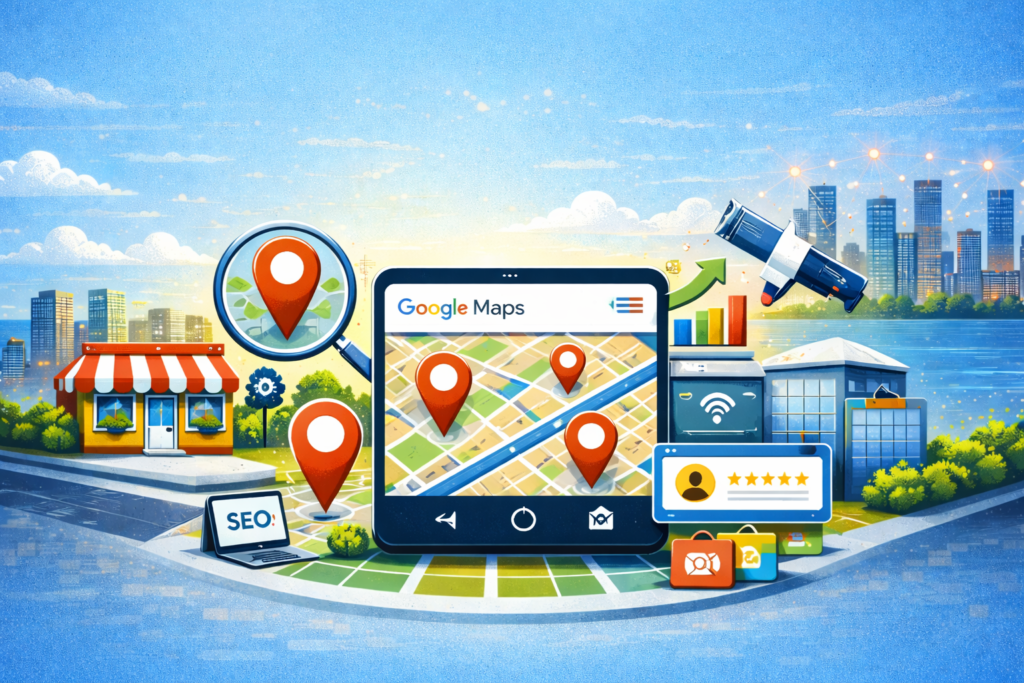
How to Rank in Google Maps and Local Search in 2026

Want to rank higher and faster on Google Maps in 2026? You are not alone. With growing competition, businesses must understand local SEO and the real Google Maps ranking factors that influence visibility. If you are not optimizing strategically, competitors are capturing customers already searching for your services. Nearly 46% of all Google searches have local intent, and most nearby searches lead to action within 24 hours. That means visibility directly impacts revenue. If you want to improve local search visibility, you need structured optimization, consistent reviews, and strong authority signals across platforms.  Stop guessing and start using a strategy that actually moves the needle. Learning how to improve Google Maps ranking fast requires a mix of technical precision and human connection. This guide provides the exact blueprint you need to lead your local market this year.  What Is Google Maps Ranking and Why It Matters in 2026 Google Maps ranking helps position your business in the “Local 3-Pack.” This is the featured map area that shows up at the top of Google. In 2026, this is the ultimate goal of local search optimization because it captures customers at the exact moment they are ready to spend money. The numbers tell a clear story of high-intent behavior. Google reports that 46% of all searches now have local intent, and 76% of people who search for something nearby visit a storefront within 24 hours. This shows that the local search algorithm is the primary bridge between a digital query and a physical sale.  Mobile Dominance in Local Discovery has shifted the landscape toward instant gratification. On mobile devices, near me searches containing purchase-focused phrases increased by more than 500% in just two years. If you aren’t ranking on the map, you are missing the most profitable traffic in your industry. How Google Ranks Businesses in Maps (Algorithm Explained Simply) The local search algorithm in 2026 is built on three key pillars. These pillars are now enhanced by advanced machine learning models that focus on verifying entities. Relevance Relevance measures how closely your business matches a user’s query. Proper Google Business Profile optimization improves this by aligning your services, categories, and content with real search behavior. Distance While proximity has always been a factor, 2026 search is smarter about “Service Areas.” Even if you’re 10 miles away, your local SEO data can help you rank higher. If you serve that specific ZIP code, you can outdo a closer but less relevant competitor. Prominence Prominence is your digital authority. It is measured by how well-known your business is offline and online. This is influenced by local pack ranking, the volume of online reviews impacts ranking, and mentions across the local web. Factor What It Means How to Improve It Relevance Matching search intent Update services and categories in GBP Distance Proximity to searcher Use AreaServed schema and Geotagged photos Prominence Authority & reviews Increase review velocity and local mentions The 8 Core Ranking Factors for Google Maps in 2026 To achieve high Google Maps visibility, you must master these local search ranking factors in 2026: 1. Google Business Profile Optimization Your profile must be complete and accurate. Add primary and secondary categories carefully. Use real business descriptions that reflect services. Upload geotagged photos regularly. Maintain consistent business hours. Strong profiles improve Google Maps ranking factors alignment and increase relevance signals. 2. Review Velocity and Quality Total review count matters, but review velocity (how fast you get new reviews) is the tie-breaker in competitive markets. Google’s AI now performs sentiment analysis on review text. If your reviews mention specific services like “best emergency plumbing,” you gain massive relevance points. 3. NAP Consistency NAP consistency (Name, Address, Phone) is no longer a suggestion; it’s a pass/fail requirement for Entity verification. Inconsistencies across the web fragment your authority and confuse AI search models. 4. Local Citations High-quality business citations reinforce legitimacy. Focus on trusted directories and niche-relevant platforms. Structured citations improve ranking factors for Google Maps by strengthening prominence. 5. Local Backlinks A backlink from a local news site or a city-specific blog tells Google you are an authority in that specific geographic area. These are significantly more powerful than generic global links for improving local search visibility. 6. Behavioral Signals (Engagement) Google tracks how users interact with your listing. High mobile local search behavior signals, such as “Click-to-Call” rates, direction requests, and time spent viewing Geotagged photos, signal to Google that your business is a high-quality destination.  7. Website Local SEO Your website must support your Map listing. This includes having a mobile-friendly design, fast load speeds, and location-specific landing pages that include your NAP and local keywords. 8. AI Visibility Signals In 2026, local search ranking tips must include AI-readiness. Use structured data for local SEO (JSON-LD) to define your business type, services, and price ranges. This helps AI Overviews “extract” and recommend your business. Google AI Overviews and Local Search Evolved in 2026 In 2026, Google AI Overviews have transformed how users discover local businesses. AI now quickly summarizes top recommendations. This means you see trusted and relevant businesses right in the search results, instead of scrolling through many listings. Visibility is no longer just about ranking first. It is about being referenced. AI summarizes local recommendations based on authority and relevance Structured content increases citation chances in AI results Consistent data strengthens entity recognition Strong profiles improve the likelihood of ranking in Google AI Overviews Positive engagement signals reinforce credibility Verified listings build long-term visibility Reviews and authority now play a larger role than ever. Online reviews affect both traditional search results and AI summary systems because they determine ranking results. The AI systems show higher selection probability for businesses that maintain structured data and consistent citations, and their review count grows. Step-by-Step Local SEO Framework for 2026 Step 1: Optimize Google Business Profile Completely Complete every section of your profile so Google trusts your data. Choose accurate categories, add services, and keep hours updated. Upload Geotagged photos monthly to strengthen

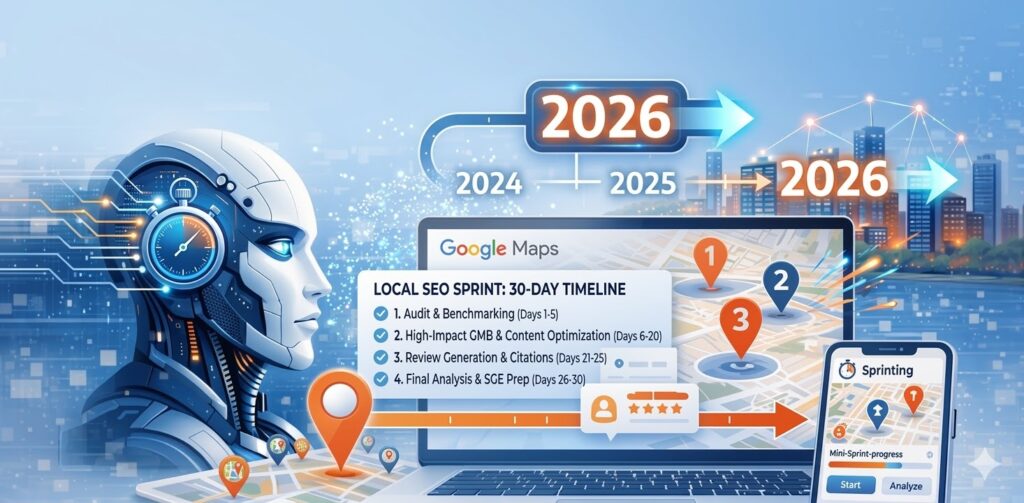
Local SEO Sprints: A 90-Day Growth Plan for Service Businesses in 2026

Local SEO Sprints: A 90-Day Growth Plan for Service Businesses in 2026

Quick Summary Local SEO sprint is the only sustainable growth model for service brands in 2026’s AI-driven map ecosystem. A structured 90 day local SEO plan broken into foundation, expansion, and authority phases for measurable ranking gains. How to execute a modern Google Maps ranking strategy using entity authority, review velocity, and hyper-local content. The operational local SEO roadmap that turns map visibility into booked calls and real revenue. Weekly execution metrics and tools that make a Local SEO strategy for service businesses 2026 predictable, scalable, and performance-focused. A data-driven Local SEO framework that aligns Google Business Profile optimization, local authority signals, and conversion-focused website improvements to dominate the local pack in 2026. 📞 Book Free Consultation Local search in 2026 is no longer predictable. Rankings shift faster, AI summaries intercept clicks, and Map results change by the week. According to Statista, global digital ad spending is projected to surpass 870 billion US dollars in 2026, meaning competition for visibility is fiercer than ever. A focused Local SEO sprint helps service businesses move with speed, not guesswork. If you run a service-based company, waiting six months for results is not a strategy. You need a structured Local SEO strategy for service businesses that drives calls, bookings, and real revenue within a defined 90-day window. This guide breaks down exactly how to execute that plan with clarity and control. Let’s get started! What Is a Local SEO Sprint And Why Does It Matter More in 2026? A 90 Day Local SEO Sprint is a focused action plan where you improve your Google Business Profile, website pages, and local signals within a clear three-month window. You focus on structured 30-day phases instead of random monthly tasks. Each phase includes priority actions that aim to boost your rankings and generate more local leads.  In 2026, local rankings change quickly because of AI updates and spam filters. So, focused, revenue-driven strategies are more important than slow, generic optimization. 30 Day Execution Blocks: Focus on one core pillar at a time such as foundations, content, or authority to create concentrated ranking impact. Revenue First KPIs: Track calls, bookings, and direction requests instead of vanity keyword positions. Measurable Tracking: Use grid-based tools to monitor proximity gains across service areas. Operational Structure: Build a repeatable system that scales across multiple locations or branches. The 90-Day Local SEO Sprint (Phase-Based Execution Model) To see results, you must follow a structured local SEO roadmap that builds authority layer by layer. Phase 1 (Days 1–30): Foundation & Entity Authority The first month is about Google Business Profile (GBP) entity optimization. We are not just filling out a profile; we are establishing your business as a trusted entity in the Google Knowledge Graph. This involves hard-coding your entity authority through Local Business Schema JSON-LD. Baseline Table Metric Current Status Target Tool Used Avg. Map Rank (5-mile) #8 #3 BrightLocal Organic Impressions 1,200/mo 2,000/mo Search Console Monthly Calls 15 30 CallRail Profile Completeness 70% 100% GBP Dashboard Once the baseline is recorded, execution begins with priority cleanup and authority alignment tasks that directly impact local pack ranking factors. Fix NAP consistency across all major directories Optimize primary and secondary GBP categories Add structured data for local SEO on core pages Audit existing citations and remove duplicates Upload geo tagged images and service specific posts Entity Signal Strengthening Checklist Task Priority Expected Impact Timeline GBP Optimization Critical High Map Visibility Week 1 Schema Markup High Improved Rich Snippets Week 2 Citation Cleanup Medium Trust & Authority Week 3 GSC Setup High Data-Driven Tracking Week 1 Your business needs to show improved map visibility and complete business information, and increased local search rankings by the end of Phase 1. This foundation ensures the next phases build on authority rather than weak structural signals. Phase 2 (Days 31–60): Content & Build Authority  Month two of your Local SEO sprint focuses on expanding relevance and strengthening trust signals. This stage of your 90-day local SEO plan builds authority. It directly impacts local pack rankings and strengthens your Google Maps strategy.  1. Publish Hyper Local Content Assets Create location specific content that answers real customer questions and supports Zero click search optimization instead of chasing generic keywords. Create city specific buying guides and cost breakdown pages Build neighborhood level service landing pages Add FAQ sections answering how to rank in Google Maps 2026 style intent queries Content Asset Purpose SEO Impact City Service Pages Target high-intent local searches Proximity relevance Cost-Based Articles Capture pricing queries Zero-click visibility Neighborhood Pages Expand geographic footprint Map visibility Local FAQs Answer real search questions Entity-based authority 2. Review System and Reputation Control Reviews are a core ranking signal in Local SEO strategy for service businesses 2026. Consistency and response behavior matter more than sudden spikes. Request reviews through SMS or email after job completion Respond to every review within 24 hours Use service and city terms naturally in replies Review Action Execution Method Ranking Benefit Review Requests Automated SMS or email Steady review velocity Review Responses Professional & location-specific Trust and engagement Keyword Usage Natural service mentions Relevance reinforcement Weekly Monitoring Track growth trends Stable ranking factors 3. Earn Local Authority Links Backlinks validate credibility and strengthen your Google Maps ranking strategy. Focus on relevance over volume. Join local chambers of commerce List in verified trade associations Contribute to community blogs Link Source Example Authority Impact Chamber Listings City business chambers Local trust validation Trade Associations Industry directories Entity credibility Community Blogs Local city publications Geographic relevance Sponsorships School or event websites Brand authority signals By the end of Phase 2, your local presence is supported by structured content, controlled review velocity, and relevant authority links. This layer strengthens your local SEO sprint and prepares your business for intense ranking movement in the final stages. Phase 3 (Days 61–90): Conversion Optimization & Visibility Enhancement In the final 30 days, your focus shifts from rankings to revenue. This stage improves your service business SEO strategy. It turns traffic into calls and

Address

Mount Web Technologies is a digital marketing partner helping local businesses and ecommerce brands scale revenue.

Contact Us

Address

C-98, Phase 7, Industrial Area, S.A.S Nagar, Punjab, 160073, INDIA

Phone Number

+91 8283022100

Copyright 2026, Mount Web Technologies. All Rights Reserved.

Mount Web Technologies is a digital marketing partner helping local businesses and ecommerce brands scale revenue.

Contact Us

Address

C-98, Phase 7, Industrial Area, S.A.S Nagar, Punjab, 160073, INDIA

Phone Number

+91 8283022100

Copyright 2026, Mount Web Technologies. All Rights Reserved.

Scroll to Top

    Read Case Study in Detail